

In October 2025, I published a deep-dive analysis of the struggles facing Japanese airlines and their domestic operations. Travel trends have changed since the pandemic, and airlines have struggled to adjust, with carriers yet to pull a profit on domestic operations since these changes.
Airlines have been gathering for several hearings over the past year, discussing the current market and necessary changes in game plans that may have to be made. Airlines involved in the latest hearing, which took place in May 2026, included All Nippon Airways, Japan Airlines, Skymark Airlines, Air Do, Solaseed Air, and StarFlyer.
I’m going to highlight some key points and updates from this hearing. In short, most market conditions have stayed the same, and Japan’s domestic air travel operations are perhaps in need of changes.
Rising Costs & Less Business Travel
Rising operating costs, weak currency
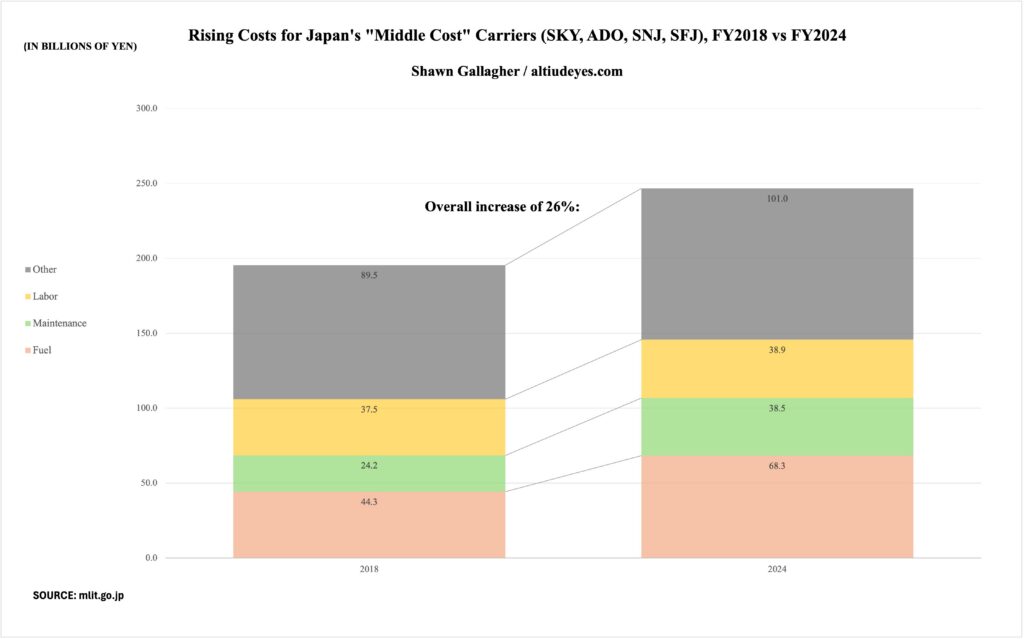
Airlines around the world have faced higher costs since the pandemic (effects made evident by failing companies, such as Spirit Airlines), and those in Japan are no different. Data by Japan’s Ministry of Land, Infrastructure, Transport and Tourism (MLIT) shows costs for both full service carriers (ANA, JAL) and regional “middle cost” carriers (SKY, ADO, SNJ, SFJ) have increased by 16% and 26%, respectively, from FY2018 to FY2024.
All Nippon Airways and Japan Airlines have the benefit of having large international operations, which have offset the money-losing endeavors of their domestic flights.
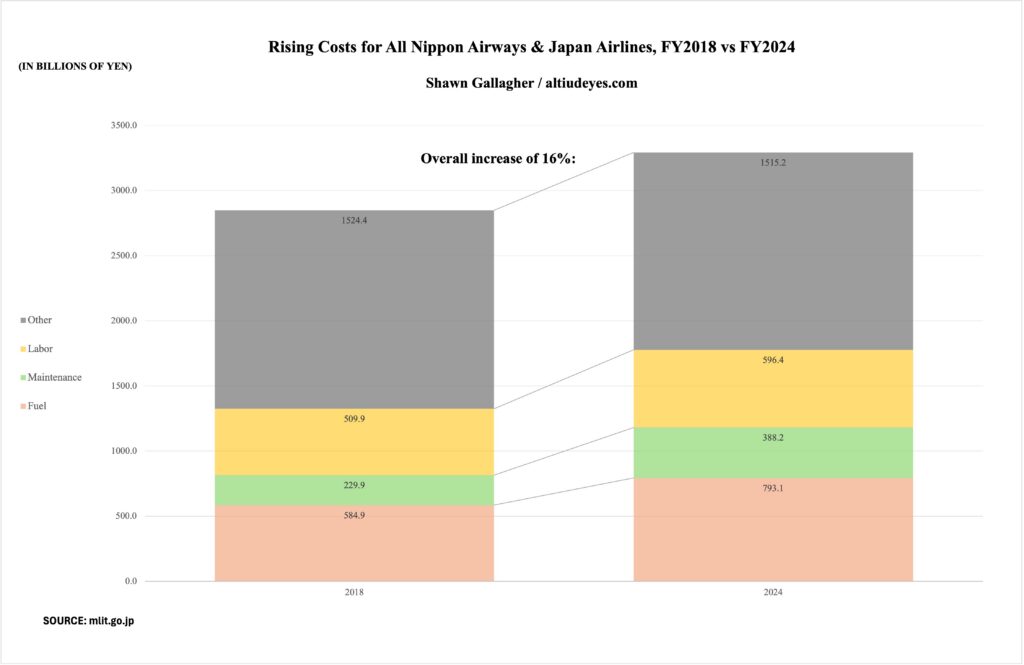
Other airlines like Skymark Airlines, Air Do, Solaseed Air, and StarFlyer face the same rising costs, but without an ample international presence, which puts them in a more vulnerable position:
While rising operating costs have been a trend across the world, Japan has also faced a significant weakening of its currency, largely fueled by an interest rate gap between it and the United States.
The USD/JPY rate began the decade close to 100 JPY to the dollar, but has increased to 160 JPY to the dollar as of June 2026.
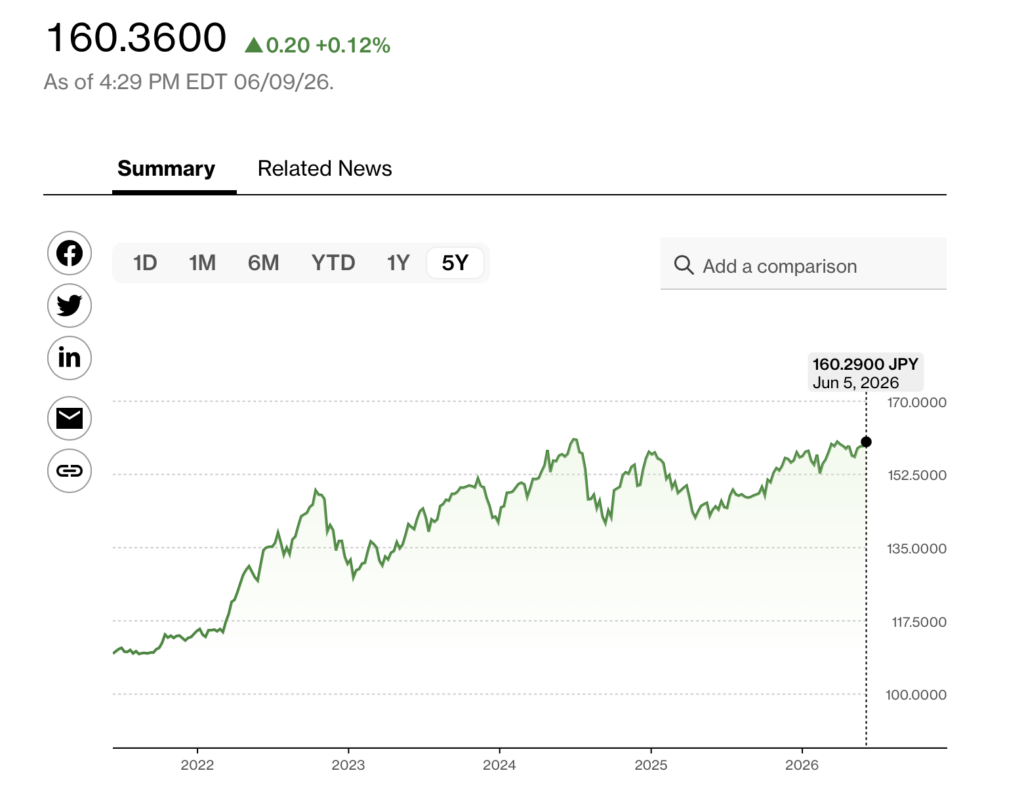
Many transactions for Japanese airlines are made in US Dollars, such as investing in new aircraft orders, buying aircraft parts, and paying for labor and contracts overseas. Take a brand new Boeing 737 MAX 8 with a 100 million USD price tag. With an exchange rate of 100 JPY to a dollar, the transaction would equate to 10 billion JPY. With today’s rate of 160 JPY to a dollar, however, that price tag increases to 16 billion JPY.
Less business travel
With the realization of online meetings and remote work during the pandemic, the number of business travelers in Japan has significantly diminished. MLIT explains that business air travel remains at 67.4% of prepandemic levels today. Having fewer of these travelers, who are responsible for much of the airline’s higher bucket fares, continues to leave a strain on revenues.
With fewer business travelers, airlines have instead run more sales and sell more discounted fares to fill seats. As a result, carriers have sold more low-fare tickets while selling fewer high-fare tickets, which has decreased profitability in the domestic market.
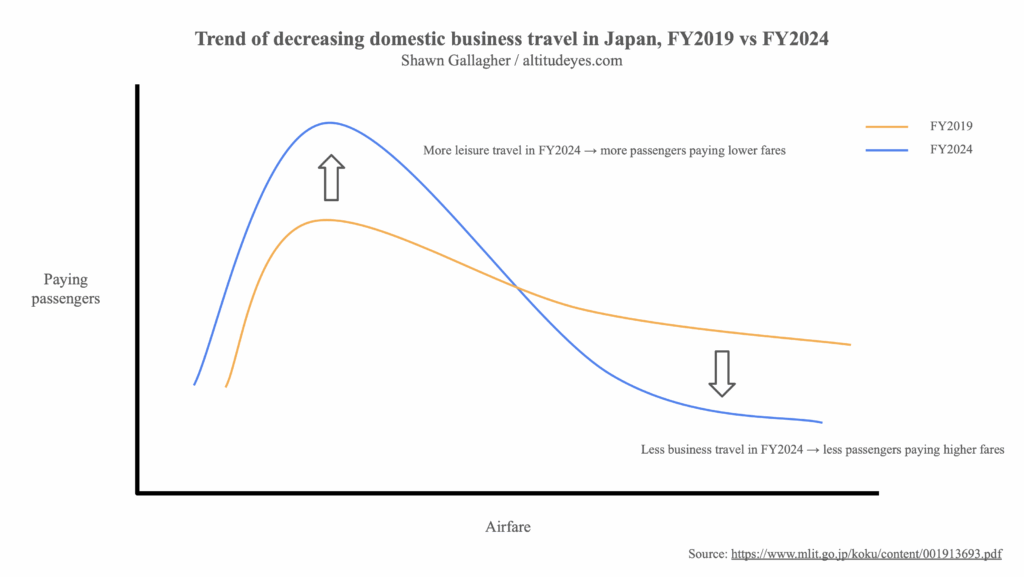
Under these conditions, Japanese airlines continue to operate at a loss for their domestic flights. Without continued government assistance and a change of strategy, the domestic air travel market remains a money-losing business.
The Changes & Future for Japanese Domestic
MLIT shared several key points regarding the future of Japan’s domestic air travel market.
1: Allowing more corporate cooperation and consolidation
Historically, Japan has limited the amount of investment that All Nippon Airways and Japan Airlines could make in the country’s smaller, independent carriers (including Skymark, Air Do, Solaseed, and StarFlyer) to encourage competition. The two giants could not own more than 20% of these smaller airlines.
This policy will change. Airlines will no longer be handcuffed and will be able to enjoy more scheduling and network cooperation among each other, and perhaps, some forms of consolidation. ANA and JAL will be able to purchase larger stakes and inject capital.
MLIT explains that Japanese domestic is no longer profitable as it is, and moves like this are necessary to maintain operations at many regional airports around the country, which serve as a lifeline for many residents.
2: Schedule and fleet adjustments
MLIT is looking to encourage carriers to avoid competing on certain scheduling slots/banks and provide a more convenient and diverse schedule for passengers.
For example, take a route between City A and City B, operated by airlines Y and Z.
Here’s the current schedule for flights from City A to B, with Airline Y’s schedule in bold and Airline Z’s schedule italicized.
- 07:50
- 08:05
- 12:05
- 12:55
- 19:20
Competition clearly exists between the first set of departures and the second set of departures. MLIT hopes that airlines could cooperate and reduce this type of competition, and instead operate a more convenient schedule for passengers between City A and B, with perhaps a selection of smaller aircraft. A revised schedule could look like something like this:
- 07:50
- 10:00 (new)
- 12:05
- 14:30 (new)
- 19:20
With a more diverse schedule and a smaller fleet, the hope is that airlines will have an easier time filling seats.
3: Encouraging foreign visitors to fly Japanese domestic
This isn’t new, but it is still important. Airlines aim to increase the proportion of overseas passenger arrivals that are fed into their domestic operations. Although this won’t fully eliminate the issue of low business travel demand, this will help the airline support its local routes, such as flights to Tohoku, which are in particularly bad shape.
Just 2.5% of foreign visitors in 2024 flew a domestic flight in Japan during their visit. The Japanese government clearly sees that this could be an opportunity for growth.
This is easier for All Nippon Airways and Japan Airlines, which already have a significant international presence. With more investment and scheduling cooperation that MILT is encouraging, however, the two giants could perhaps make international-to-domestic connections to the smaller regional carriers easier.
Regarding the foreign visitors themselves, the Japanese government will also look to increase its efforts in B2C marketing for its regional destinations in the country. Opportunities exist, such as more visibility for its regional airlines when searching travel routes on Google.
Bottom Line
Many questions remain surrounding the Japanese domestic air travel market. The future of its carriers, especially its regional “Middle Cost” carriers that do not have significant international operations, may be in jeopardy. Going forward, MLIT will encourage more corporate cooperation and consolidation, scheduling agreements, and will look to market to foreign visitors to fly on more of its domestic flights to reach destinations.
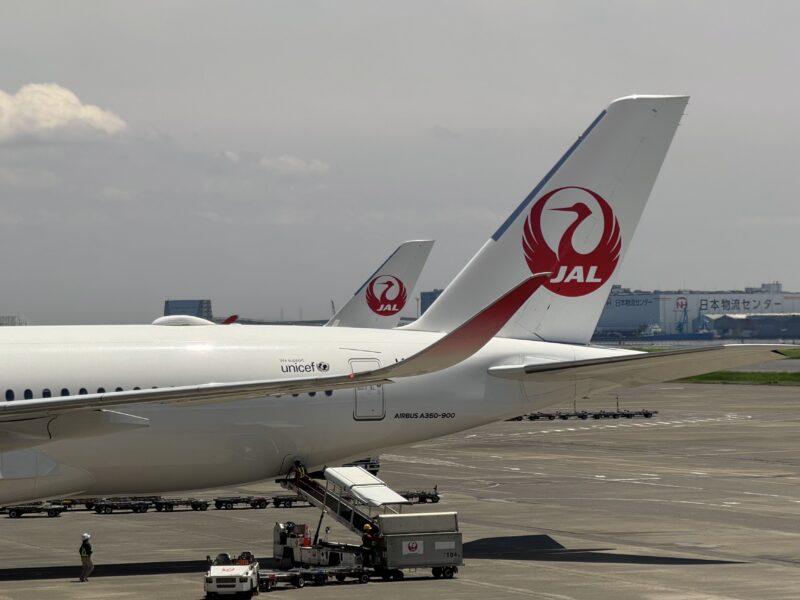
Featured image by the author.