




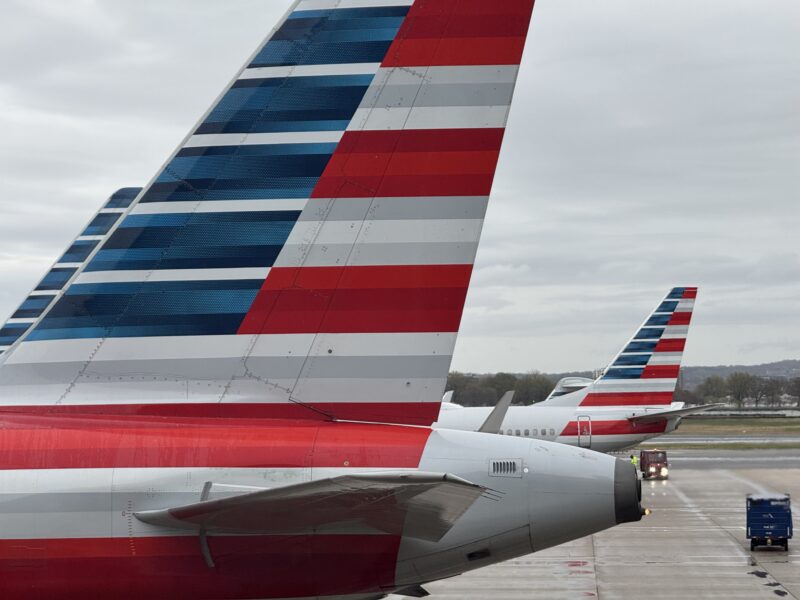
Last week, Semafor reported that JetBlue hired advisors to explore the idea of selling itself to a competitor.
Possible merger partners included in the report were Alaska Airlines, Southwest Airlines, and United Airlines. The carrier is reportedly thinking about how each scenario could play out on political and regulatory grounds in Washington.
JetBlue is no stranger to antitrust hurdles involving the federal government, as it previously had an American Airlines partnership and a Spirit Airlines acquisition blocked by Biden-era regulators.
On paper, United Airlines seems to be the most natural fit. The two carriers announced a partnership back in May 2025, and JetBlue’s JFK assets would be the primary appeal for United. CEO Scott Kirby previously stated that a merger is “in JetBlue’s court.” However, the airline remains disciplined on price and may be deterred by JetBlue’s heavy debt load.
By contrast, Alaska Airlines raises the fewest antitrust issues and could leverage its strong balance sheet, even after acquiring Hawaiian. Southwest Airlines is arguably the least likely candidate of the three, but as both carriers look for partners, they’re still one to watch.
Then there’s American Airlines.
American Airlines wasn’t included in the Semafor report, but it has the most to gain out of a possible JetBlue merger with New York City assets, a bigger presence in Boston, and potential boosts in credit card revenue. The carrier is in an interesting position today. It hasn’t been meeting its revenue potential, its network is not aligned with premium demand, and it lacks a clear strategy.
American and JetBlue tried a partnership previously, the Northeast Alliance, and failed. But in light of JetBlue’s wishes for a merger, I’m going to revisit the current state of American Airlines and analyze how a possible partnership or acquisition could play out today for the airline, whether it has the vision to make another push if given another chance.
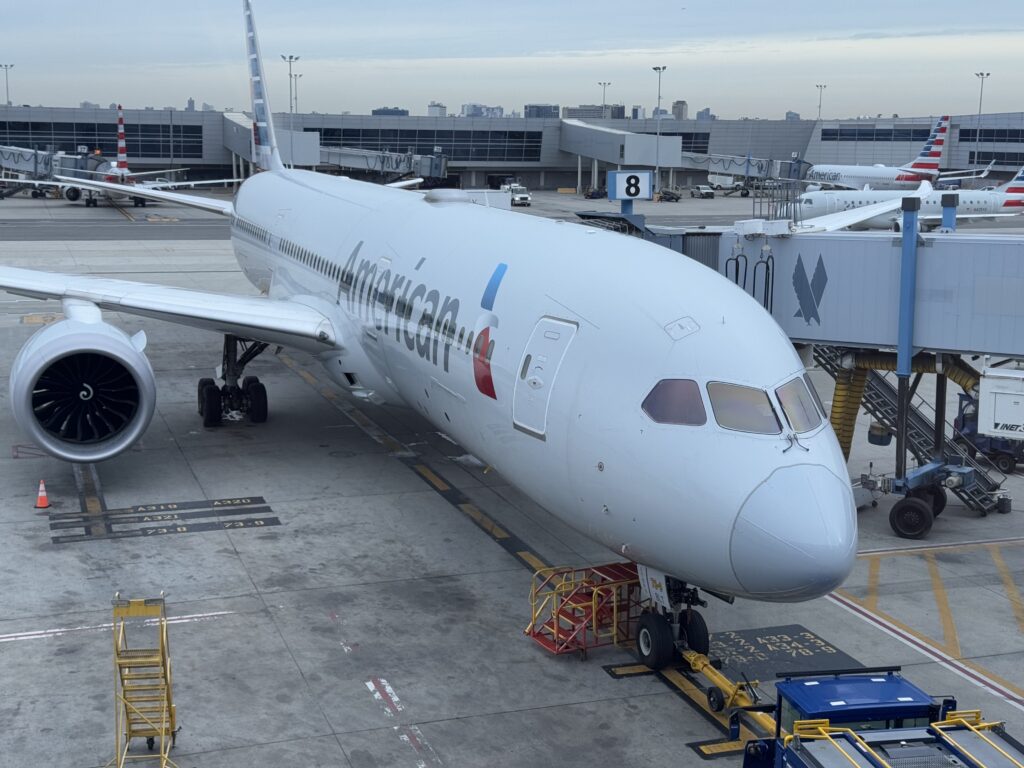
American Airlines in New York City
For any airline looking to acquire JetBlue, its assets in New York City are the most lucrative, and this should be the most important for American Airlines.
American’s market share in New York remains limited, and it does not lead in any of the three major airports.
In 2025, Delta accounted for 28.2%, United accounted for 23.7%, and American accounted for 14.9% of total flights out of the city. JetBlue wasn’t far behind American, at 11.6%.
To American’s credit, the airline has built up presence in Sun Belt cities, and maintains a powerful operation in Dallas. But limited market share in New York, combined with the airline’s decisions to pull back from Chicago and Los Angeles over the past decade, arguably constrains the airline in reeling in revenue from premium passengers American may want to transport, especially during a time where premium demand has shown resilience. A strong network out of New York is important for the airline to drive AAdvantage and credit card revenue.
To explain why this is important, I’m going to point to a recent Airlines Confidential Podcast, which featured former American CEO Doug Parker as a guest.

In the podcast, Parker talked about how airlines determine profitability in a route. It’s not as simple as a retail chain, where costs and revenue can easily be determined for each store. For airlines, each route is part of a bigger network, with passengers taking connecting flights, alternating between one-way and round-trip tickets, and redeeming award tickets.
Part of determining route profitability required Parker to discuss the importance of credit card revenue. He explains that airlines should take money from credit cards (in American’s case, Citibank), and allocate it to the flights where passengers redeem award tickets to determine profitability.
There are flaws to this though. In order to get customers to redeem miles, you first have to give them opportunities to earn those miles. Passengers spend with an airline because they serve routes they need to fly, and American should ultimately allocate the money from Citibank to those routes that generate that credit card revenue. This math could explain why American Airlines pulled back from New York, Chicago, and Los Angeles.
Consider a New York-based business traveler, Shawn Gallagher, who frequently flies from New York to Europe. He also wants to redeem frequent flyer miles to visit family in Japan, which American AAdvantage would be great for, with cheap award tickets in economy class and attractive premium cabins on partner airlines.
While AAdvantage could give him better redemption options for vacation, a good portion of American’s transatlantic traffic is pushed through Philadelphia and Charlotte, not New York. As a New York resident, he may find United and Delta to have more extensive and frequent service over the Atlantic, which would ultimately be the deciding factor for his business travel.
The lucrative award tickets he could access through AAdvantage won’t matter if American Airlines doesn’t offer a solid network and give him a chance to earn those miles in the first place.
Put simply, American needs a more robust network and a bigger presence in New York City to drive AAdvantage and credit card revenue. New Yorkers won’t bother with AAdvantage until American offers flights to where they want to go. Its poor market share has limited its ability to reel in high-spend customers, while its lack of widebody aircraft has limited its ability to offer both convenient and attractive destinations out of the city.

The Tri-State Area is one of the wealthiest places in the world, and cardholders in the region can generate a lot of credit card revenue. This is where a JetBlue acquisition can be key for American.
JetBlue’s assets in JFK would give it a unique opportunity to build up the city. It’s difficult to regain market share in a city where United and Delta hold a large presence, in addition to being slot-restricted in JFK. If American wants to establish its position in New York City, take advantage of credit card revenue, and rethink its East Coast strategy, I argue it should aggressively pursue an acquisition.
The airline certainly has the data as to what it could expect from a merger. Its AAdvantage and co-brand sign-ups in New York shot up during the Northeast Alliance.
A similar argument could be made for Boston, another city with a high median household income, in which JetBlue holds a major presence. No carrier singlehandedly dominates this city, which could pose a unique opportunity for American to capture more premium and high-spend customers. JetBlue certainly doesn’t have the credit card portfolio today either, which is another area American could expand further with Citi.
American Airlines can tout its “premium” all they want. Its new Flagship Suites and Bollinger Champagne are fantastic premium additions. But until the airline serves the right passengers to and from the right places, it won’t become the premium airline it wants to be. It all goes back to identifying where your premium passengers live and serving them conveniently.
Regulatory Challenges, American’s Balance Sheet
Antitrust Hurdles:
JetBlue pursued a partnership with American Airlines during the Biden administration, which ended up blocked on antitrust grounds.
The regulatory environment is different now under the Trump administration, which could benefit most forms of consolidation. American poses less regulatory risk than United in New York, given American’s low market share and United’s robust network out of Newark, especially on the transatlantic side.
Fort Lauderdale is an area that could pose some antitrust issues. The airport is JetBlue’s South Florida stronghold and is in proximity to Miami, one of American’s major hubs and its Latin America gateway. Some divestiture in Fort Lauderdale could make sense to make a deal work.
While a deal would still be an uphill battle, regulatory risk is arguably not the biggest issue with American and JetBlue today.
Leadership:
Questions around the leadership team at American remain, but Nat Pieper, as a true Richard Anderson lieutenant, could play an interesting role in the C-suite on whether the airline should consider JetBlue. There have already been suggestions that he is taking a more centralized role in American, namely with seatback screens, flagged by aviation insider JonNYC.
Pieper worked under Richard Anderson at Northwest and then at Delta following the merger. He taps into his Northwest roots, bringing a new viewpoint to American, which could offer the airline a deal in such a case that it decides to pursue JetBlue once again. He doesn’t run the entire show, however. It’s a matter of time until his effectiveness in the C-suite comes about, but his rising leadership role among American executives shouldn’t go unnoticed when thinking about American and JetBlue.

Financials:
The carrier doesn’t exactly have the strongest balance sheet. But while it had more than $50 billion in debt at its peak, it has worked down to about $36 billion today, with about $10 billion in liquidity. While it still might not be in the strongest position to afford JetBlue relative to Alaska or United, the upside could still be something to consider.
However, JetBlue would bring in its own debt issues, which could put a twist on American’s existing financial issues, especially as it eyes a major widebody order in the near future and navigates an uncertain and volatile cost environment.
Bottom Line
While the American Airlines and JetBlue partnership fell apart previously, the latest merger rumors bring a unique opportunity under different political and regulatory grounds from the days of the Northeast Alliance. Whether or not the two airlines decide to pursue a merger, there are significant upsides for American in a potential situation. The airline needs a larger presence in New York to meet premium goals and boost credit card revenue. Antitrust risk may not be one of the biggest issues, while the airline may have to weigh its financial situation against the potential upside from the merger.
Featured image by the author.

It’s interesting to see JetBlue exploring a potential merger, especially given the regulatory challenges they’ve faced before with American. The strategic fit with American—particularly in terms of route overlap and credit card revenue—seems like a natural evolution for both carriers. It will be worth watching how this plays out politically, especially in Washington, but the potential benefits for both airlines are clear.