


After a brief visit to Osaka after flying over from Tokyo on JAL’s Domestic First Class, it was time to return to Tokyo, this time in economy class.
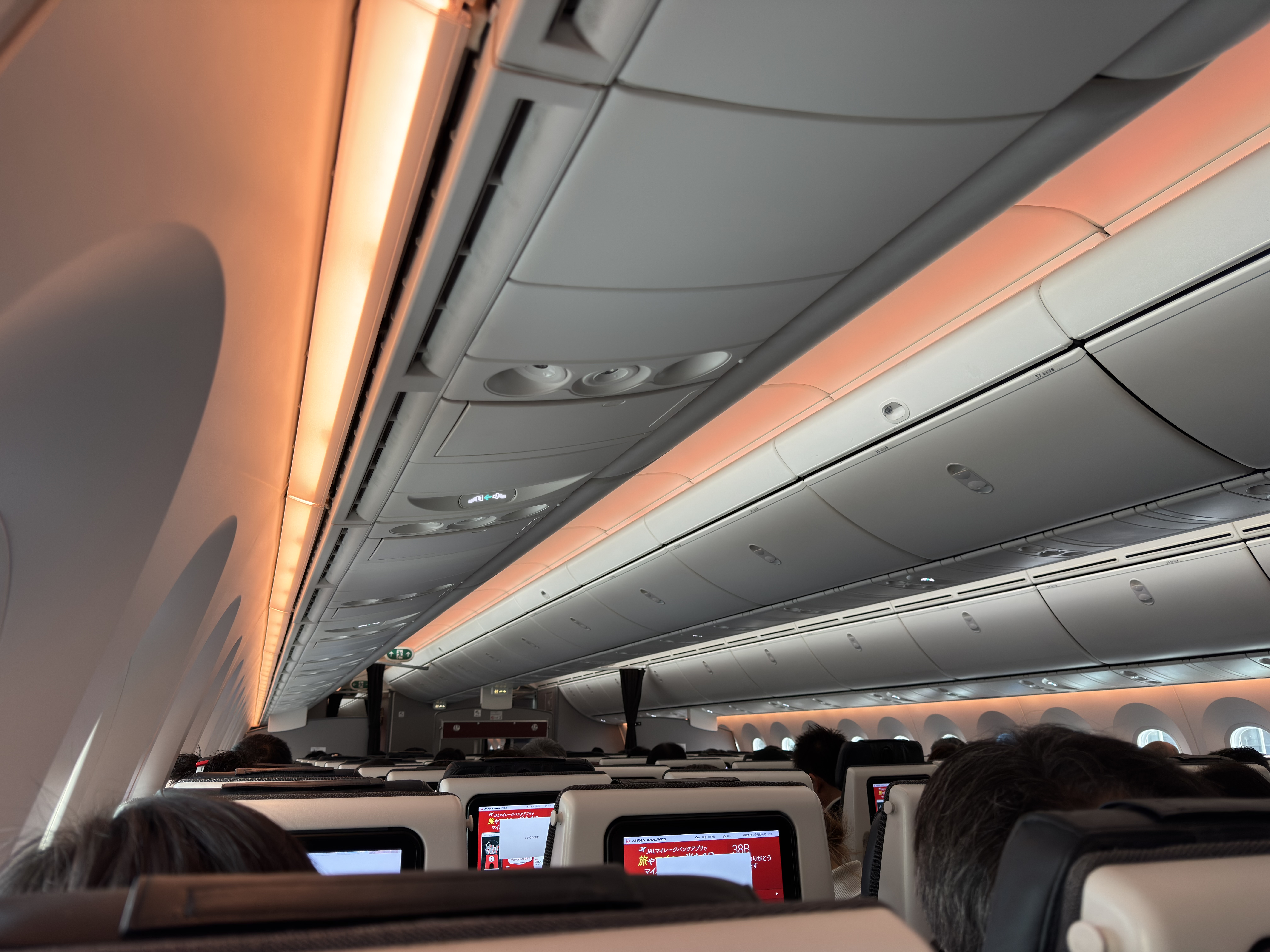
Although it may sound like an uneventful 1-hour hop back, Japanese domestic flights are a lot of fun. Being on a widebody with seats also seen on aircraft for international flights, it really did feel like I was boarding a long-haul flight.
Let’s go over my return trip.
Booking
I booked this flight with Japan Airlines miles. Although I didn’t have a ton of them, I decided to book using them since it was an opportunity to burn them before they expire after 36 months.
Yes, Japan Airlines Mileage Bank unfortunately has a strict expiration date for its miles. I paid 7,500 miles for this economy class ticket, most of which were about to expire soon. I finally found an opportunity to use them.
I typically book Japanese domestic flights directly through Japan Airlines, but I sometimes credit them to AAdvantage. These JAL miles I used were some leftovers from previous flights that I neglected to credit to American.
Although there are some good uses of Japan Airlines miles, they’re relatively hard to accumulate and the expiration date of miles makes it a challenge. It’s best to take advantage of transfer partners like Capital One when they offer transfer bonuses, like they are doing right now.
Boarding
The ground experience was uneventful. Security was quick, and I arrived at my gate shortly before boarding.
My aircraft of the day was JA849J, a 5-year-old Boeing 787-8 delivered to Japan Airlines back in March 2020.
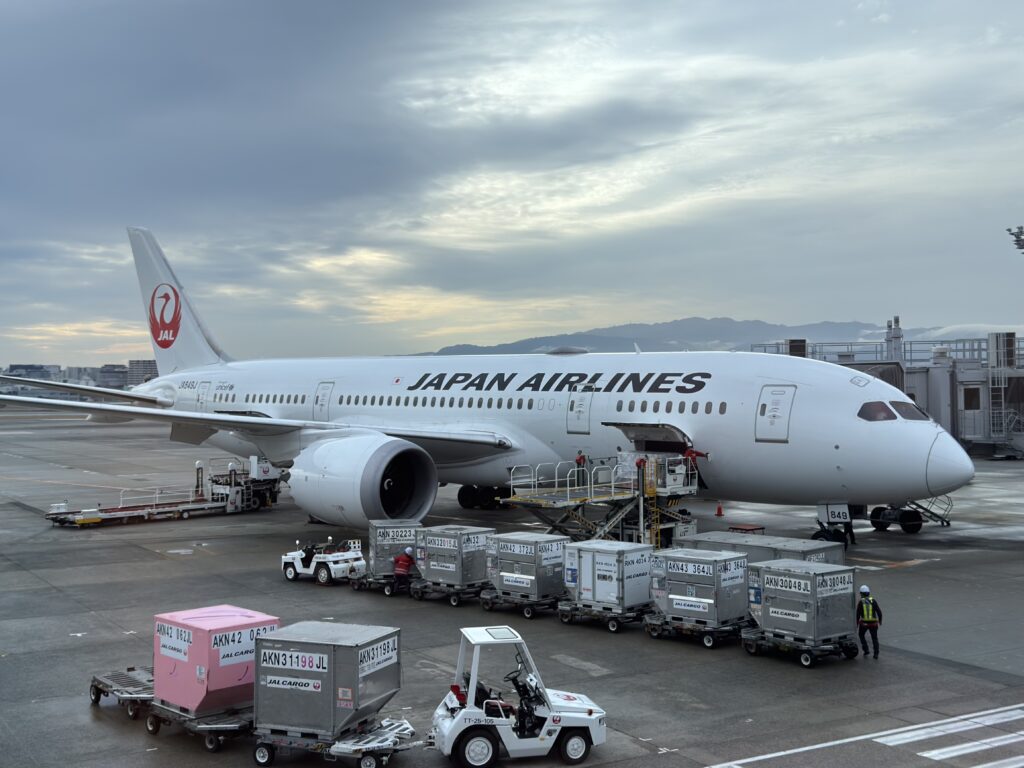
JAL has a total of four 787-8s in a domestic configuration, seating a total of 291 passengers. The aircraft has six First Class, 58 Class J, and 227 Economy Class seats.
Boarding and departure were delayed by 10 minutes. Group 1 passengers began lining up quite early, which is a common sight in Japan.
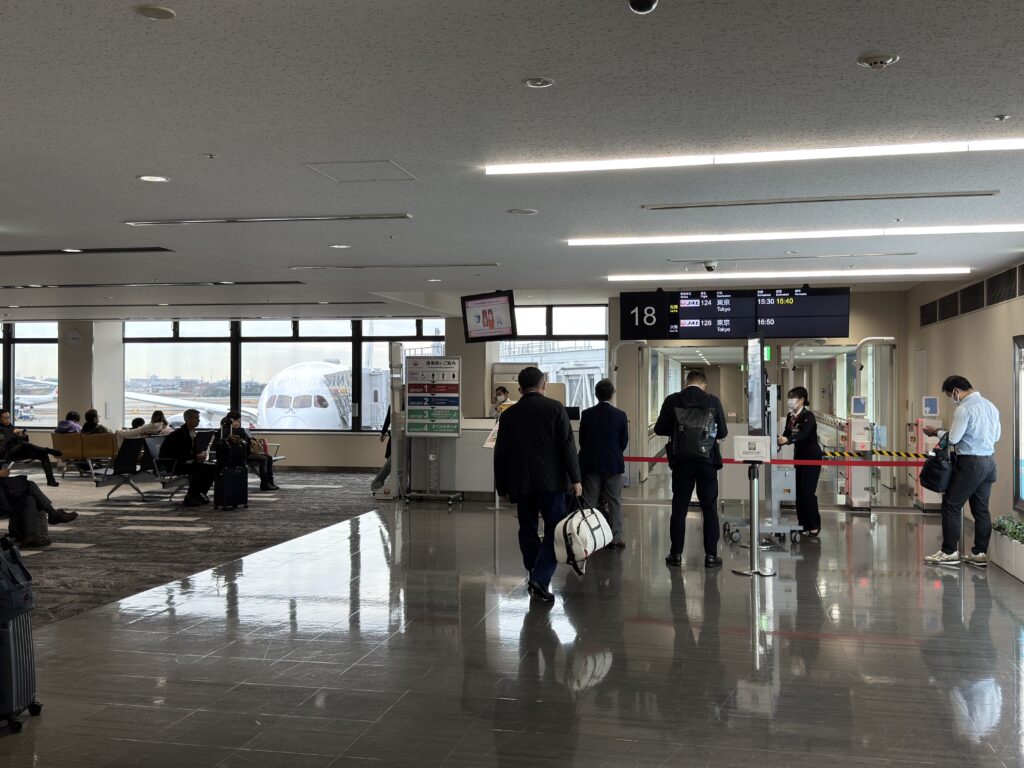
I had booked seat 39A, so I took the second jetbridge to board.
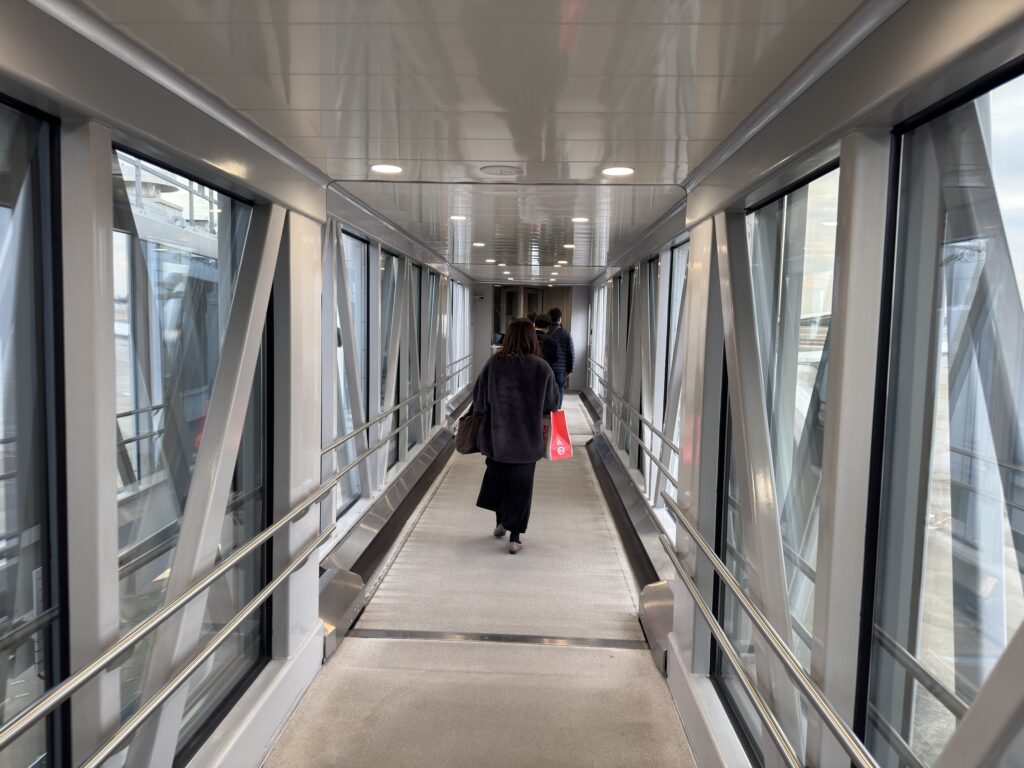
JAL does whatever it can to speed up boarding and reduce its dwell times on the ground. Economy class passengers seated in F, G, H, J, and K boarded on the same jetbridge as First and Class J.
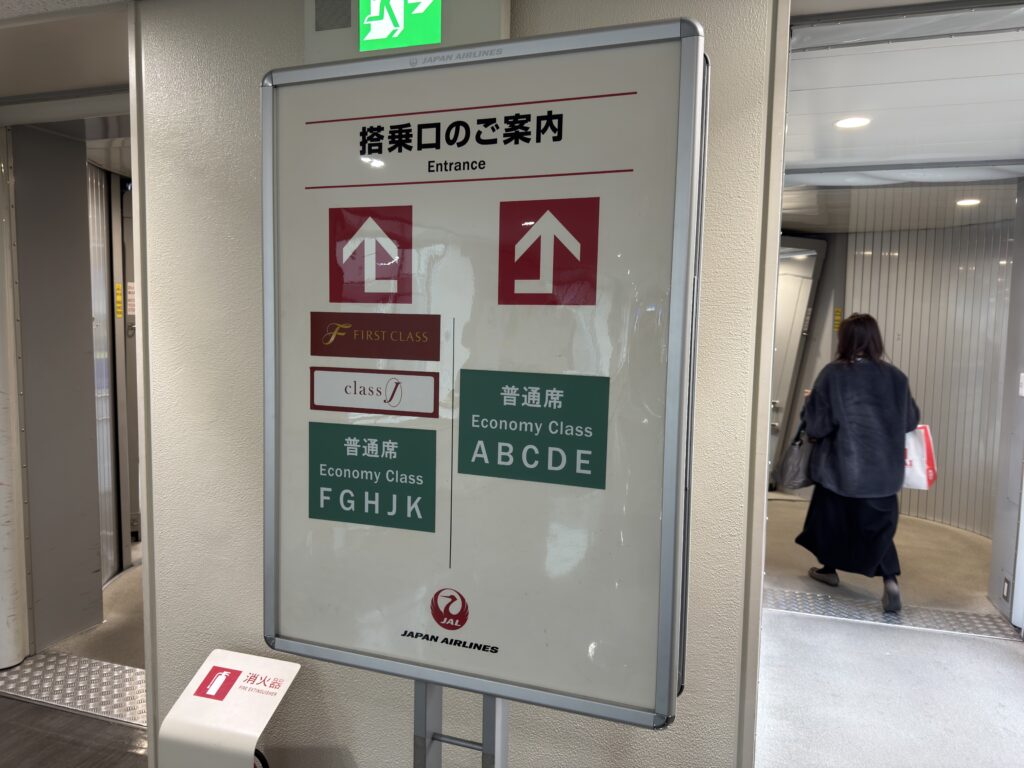
Aside from First Class and elite passengers, boarding for everyone else depended on whether they had a window, middle, or aisle seat, and how forward or back in the cabin.
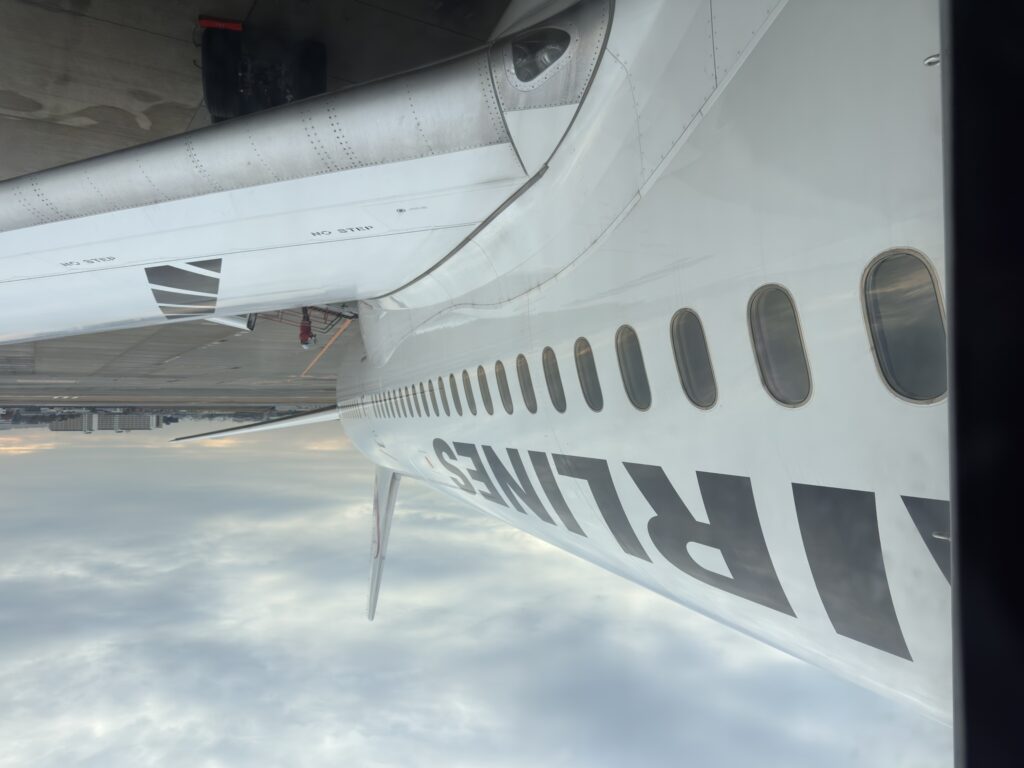
Onboard
These Japan Airlines Boeing 787-8s sport the Recaro CL3710s in economy class. This is a very common seat on internationally configured aircraft, such as on Cathay Pacific, Delta, and many other airlines. These seats can also be found on JAL’s newer Airbus A350-1000 on international flights, albeit with a slightly different design and dimentions.
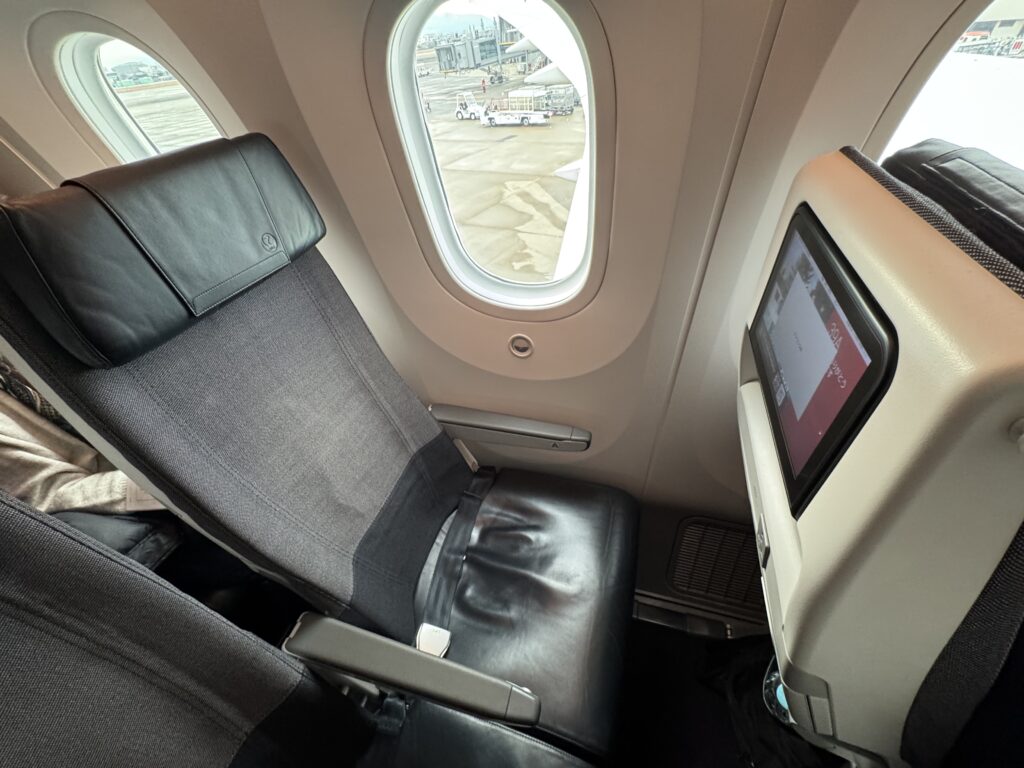
I was greeted by a 10.6 inch IFE screen as I sat down.
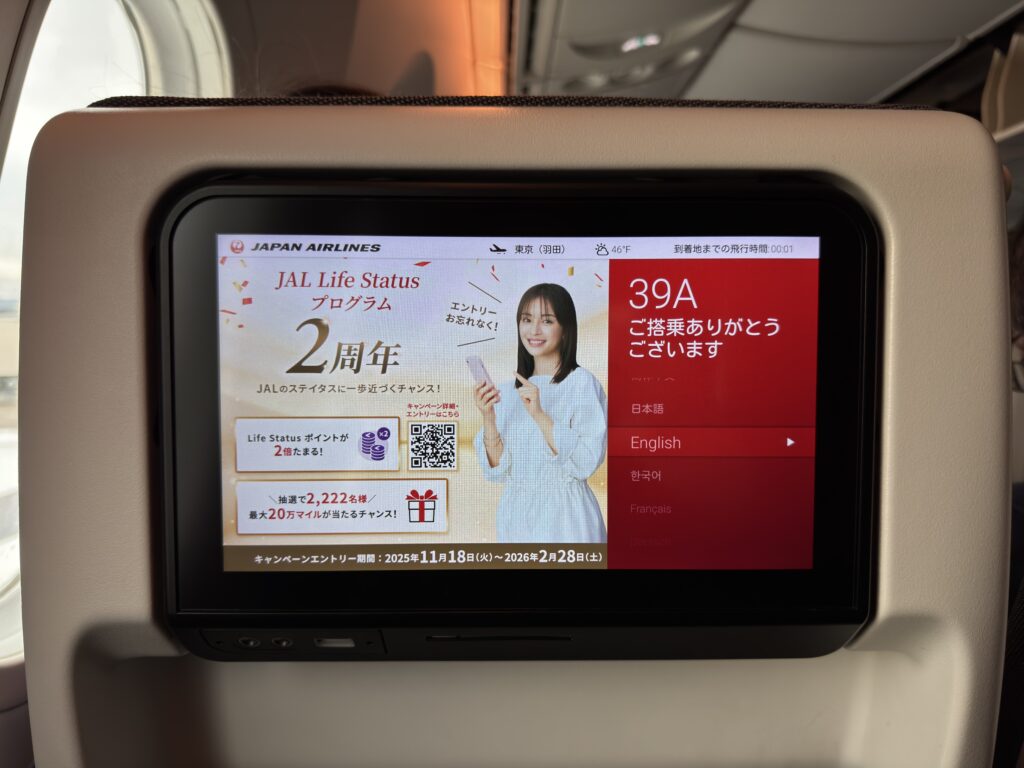
The headphone jack and a USB-A port are located on the screen…
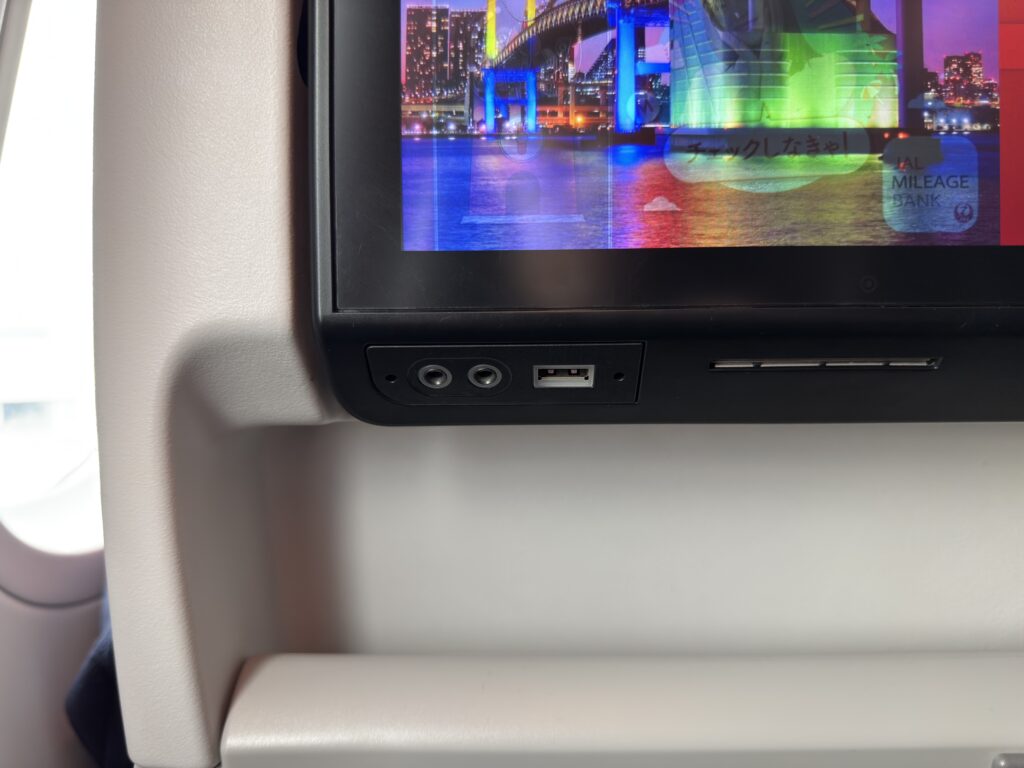
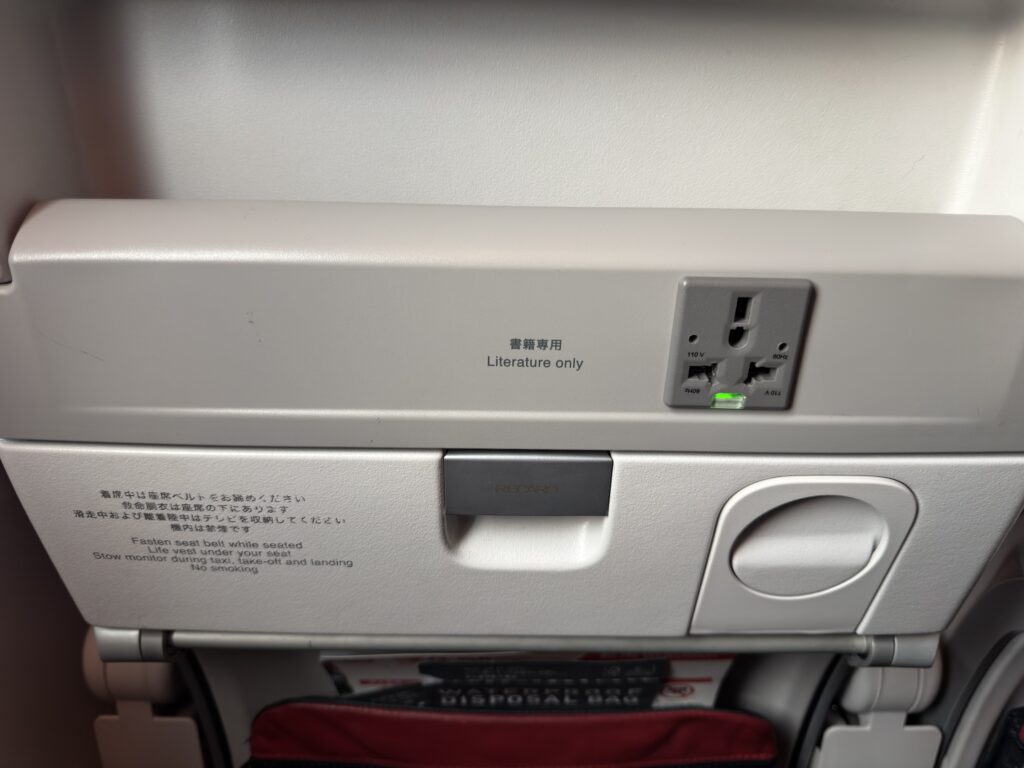
…and a universal power outlet is located at every seat, just above the tray table.
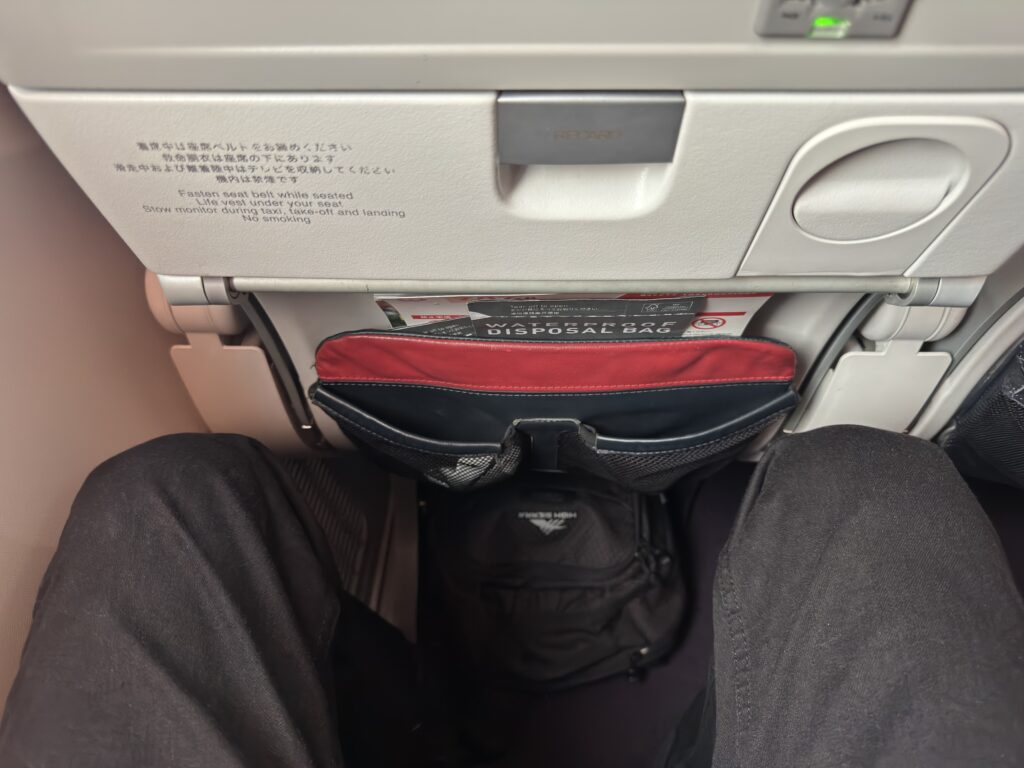
Legroom is average for a domestic flight, billed at 31 inches. This is the same amount of legroom as most legacy U.S. domestic aircraft.
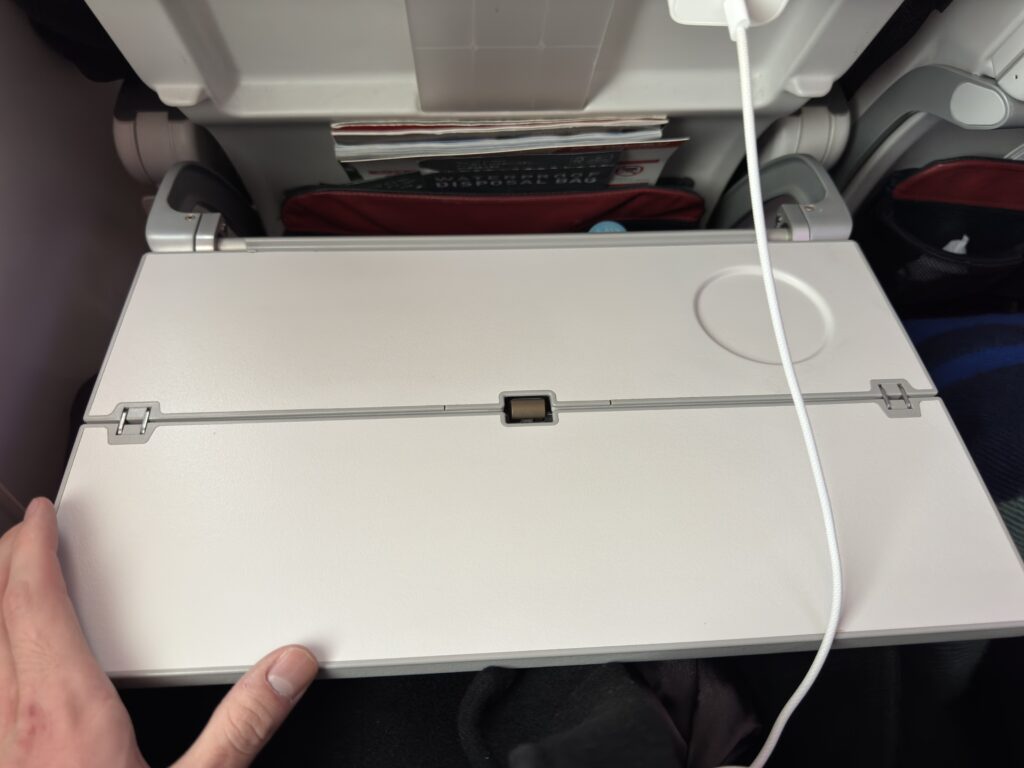
The tray table was foldable:
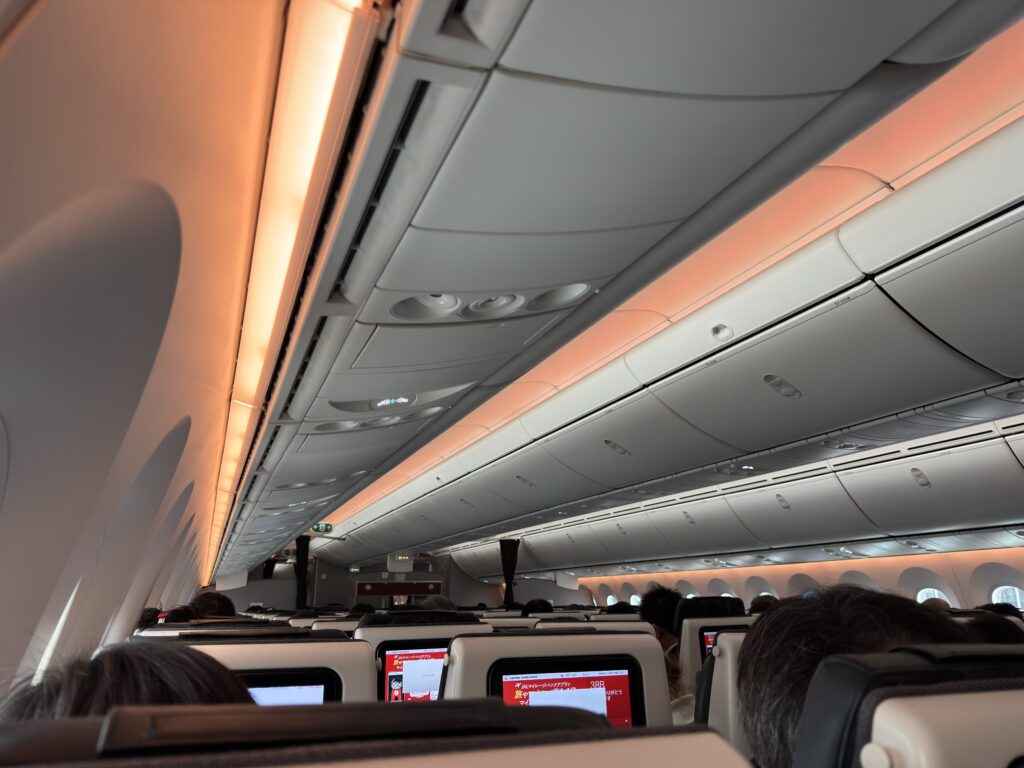
Although JAL boasts a generous 2-4-2 layout on its international 787s, these domestic 787s come in a 3-3-3.
The Quick Flight to Tokyo
The total flight time this day was 47 minutes. We pushed back and took off slightly behind schedule.
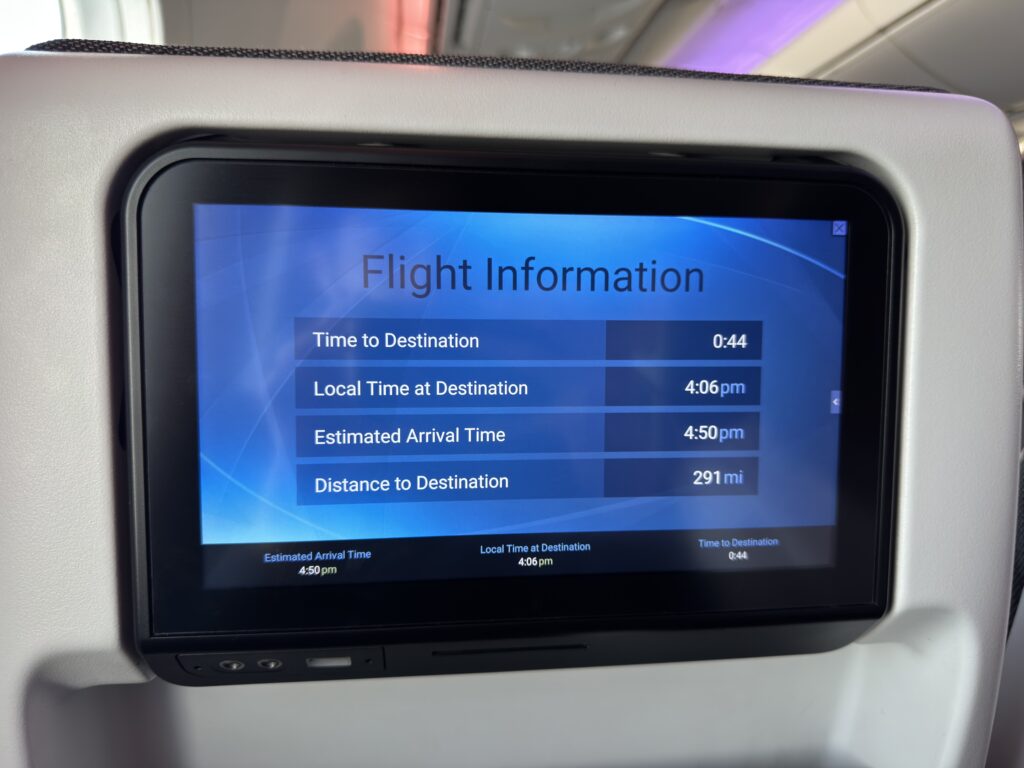
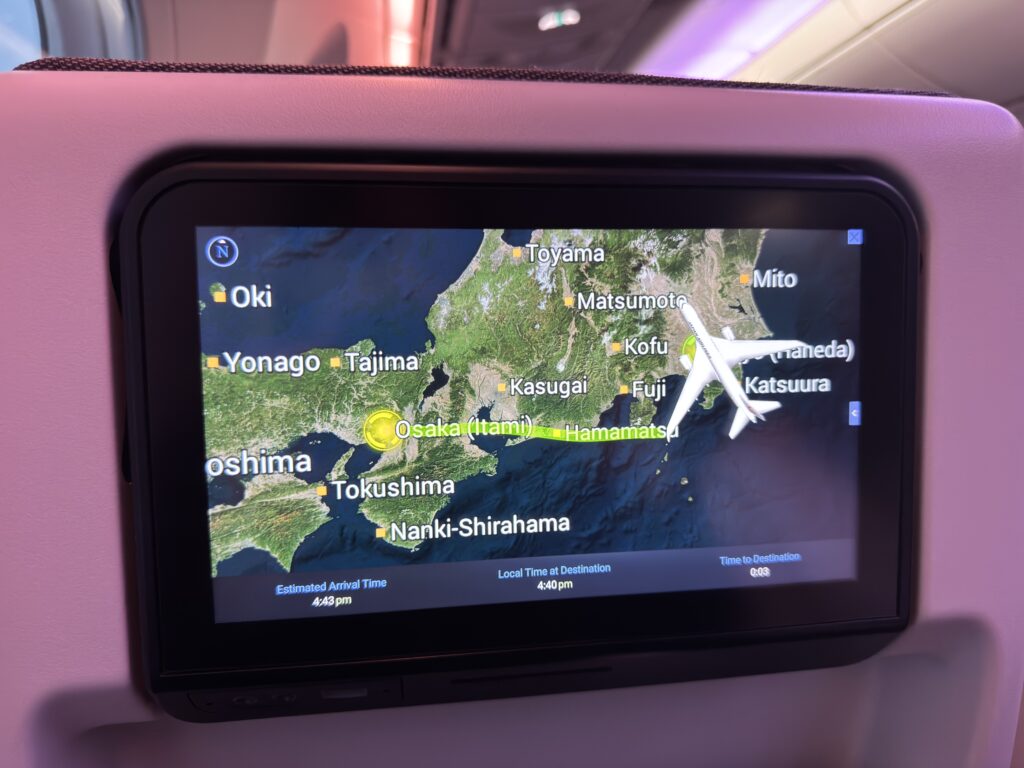
There was absolutely no need for an IFE screen on this flight, but I appreciated it being here, as I was able to check out the map.
Wi-Fi was also available for free, but the speeds weren’t stellar. JAL uses Panasonic’s Wi-Fi system for most of its aircraft, and that was the case on this aircraft.
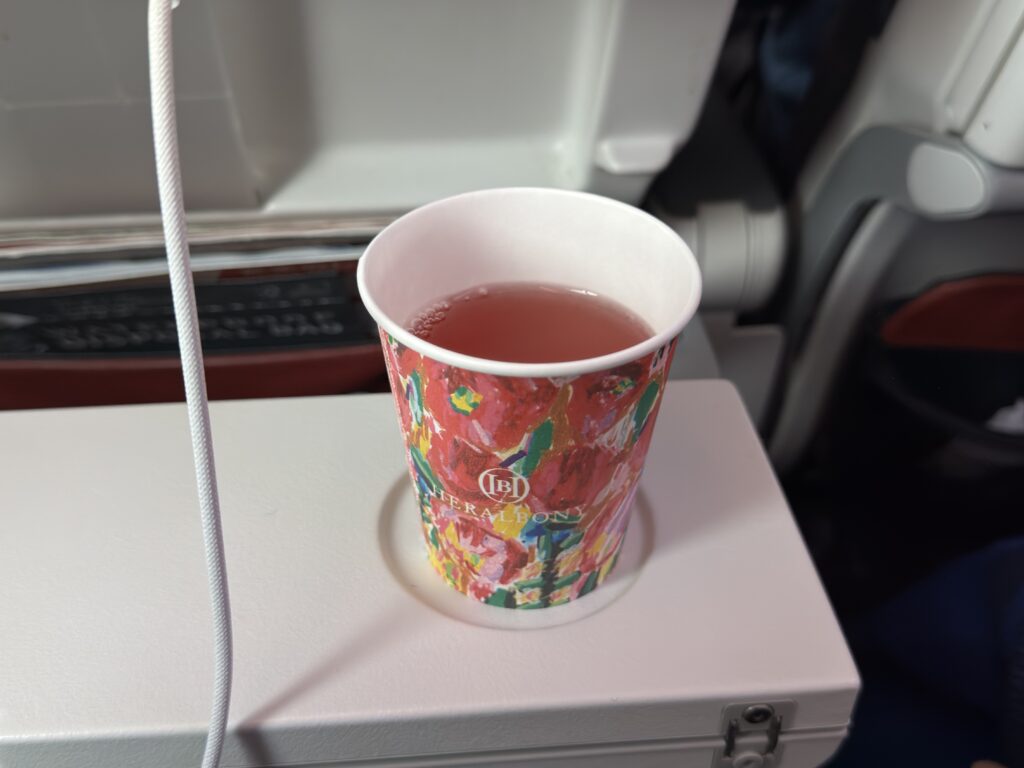
We got a quick beverage service after takeoff. I requested JAL’s Skytime peach and grape juice mix, which is my go-to when I fly with them.
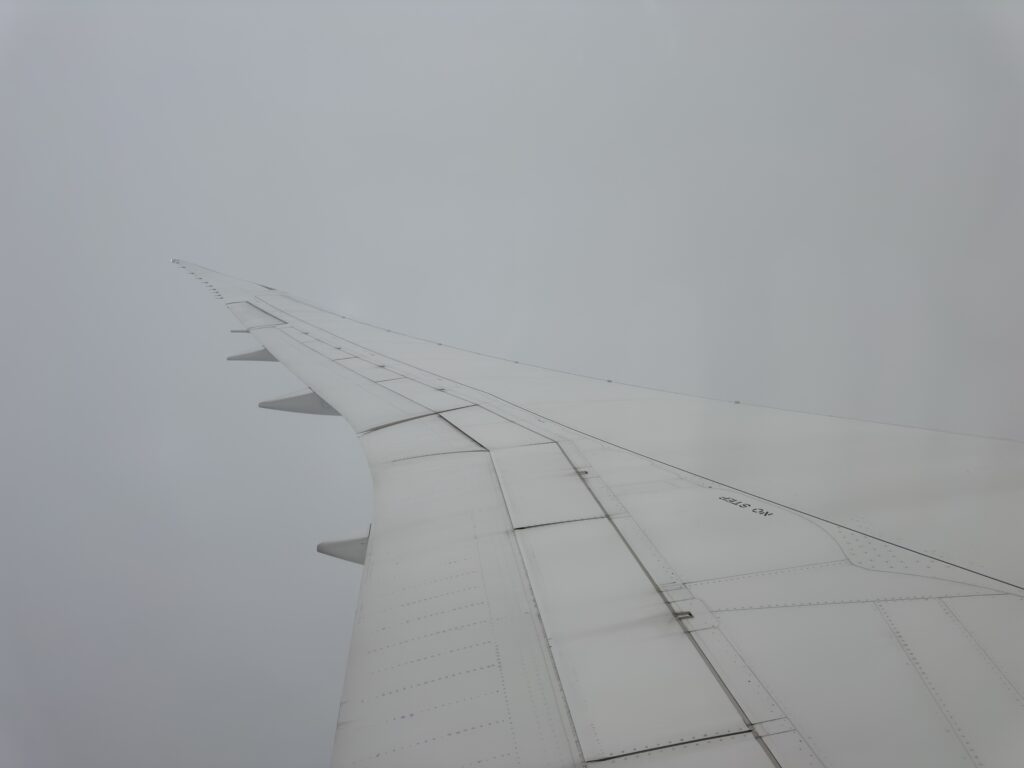
I didn’t do much for the rest of the flight, and we were making our descent into a rainy evening in Tokyo before I knew it.
Concluding Thoughts
We arrived pretty much on time. Just a few minutes behind the posted schedule, which was no issue.
JAL’s domestic Boeing 787-8 is a pleasant way to fly a 1-hour flight. The seats are comfortable enough that I would have no issue in this seat on longer international flights. The quick and smooth boarding process is also nice on Japanese domestic flights.
I generally prefer to fly between Tokyo and Osaka, despite the Shinkansen, just because I love flying. However, the smooth experience that Japanese domestic flights offer, even in economy, adds to the experience and convenience.
All photos taken by the author.