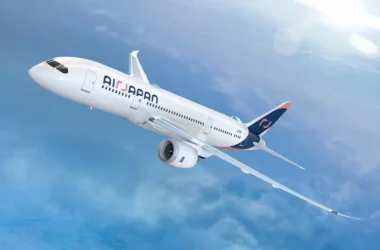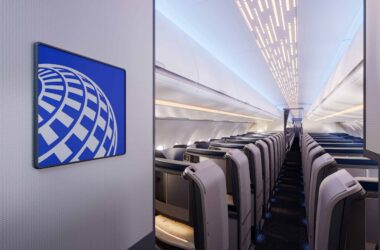


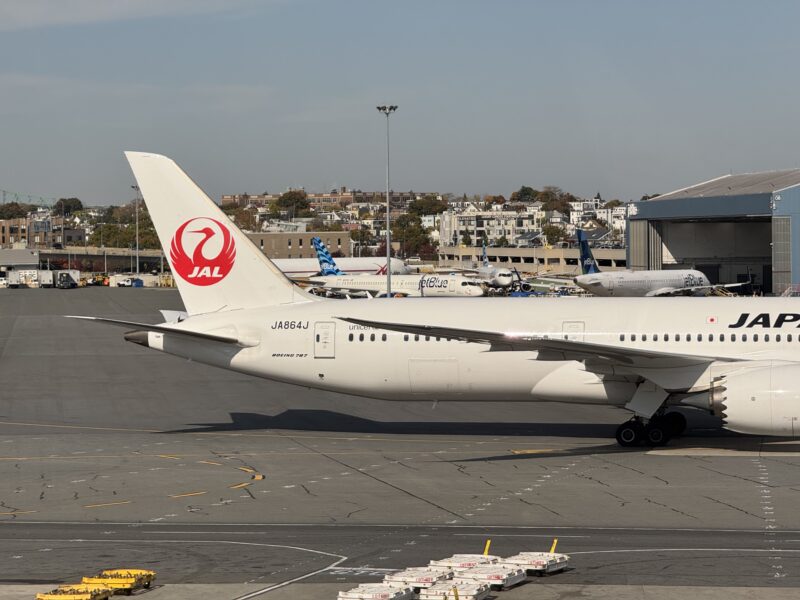
Japan Airlines and Boeing announced upcoming interior upgrades to the carrier’s Boeing 787-9 fleet during the Singapore Airshow in early February.
Passengers can expect new seats and high-speed Wi-Fi, the latter of which the airline has begun to lag in competition in recent years. JAL will be moving on from its current Panasonic offering to a low Earth orbit (LEO) solution for its IFC.
There are currently no further details on vendors for its new seats or Wi-Fi.
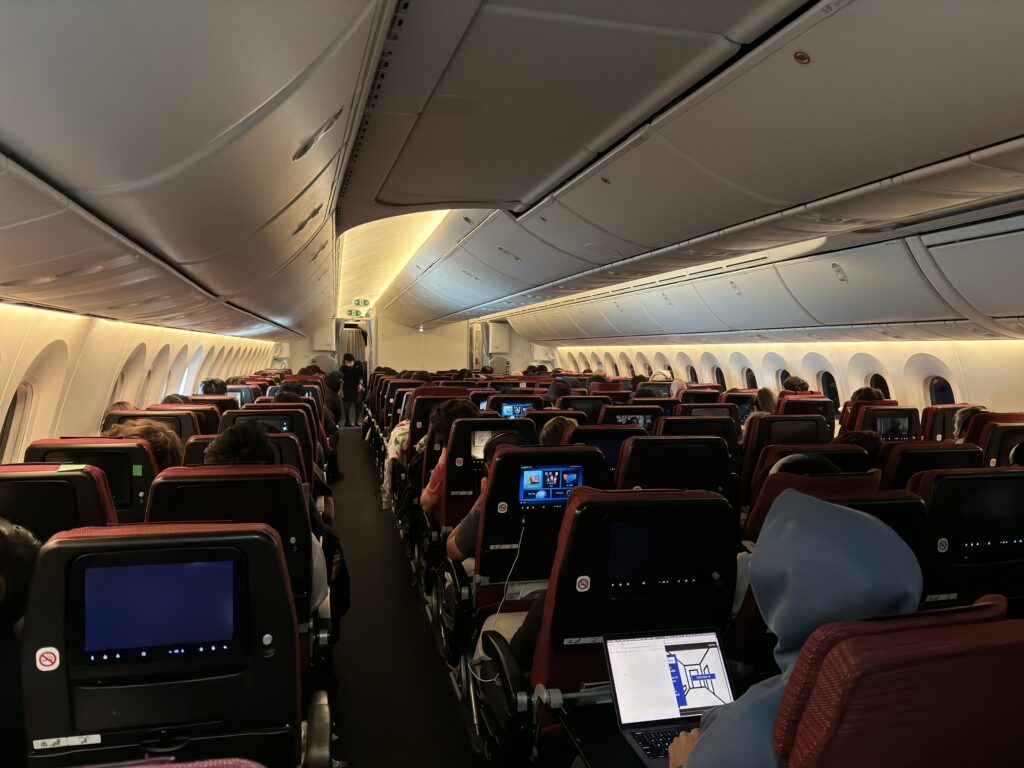
Today, JAL’s 787s boast some of the most comfortable economy class seats in the airline industry, laid out in a generous 2-4-2 configuration. The airline will likely focus on its IFE and other tech for these seats, and hopefully keep the generous eight-abreast layout.
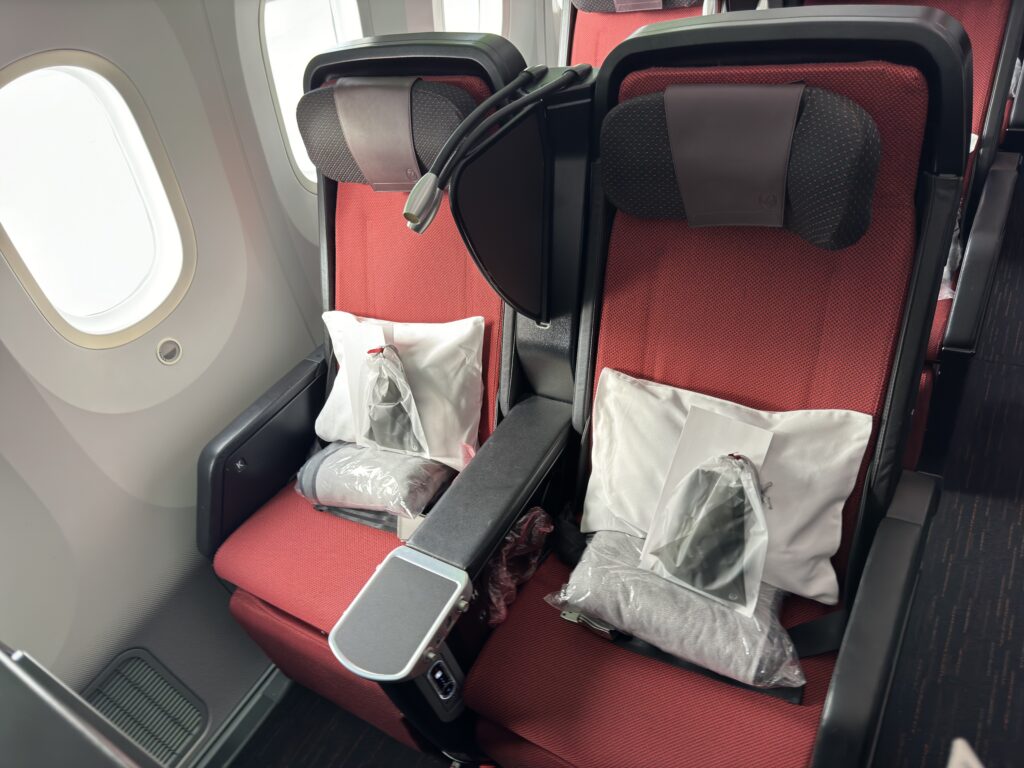
Premium Economy seats are based on the Safran AIRgo FX platform, in a 2-3-2 configuration. These seats are on their way out on the Boeing 777-300ERs, and it makes sense to do the same on the 787s.
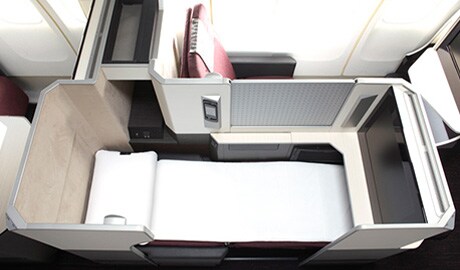
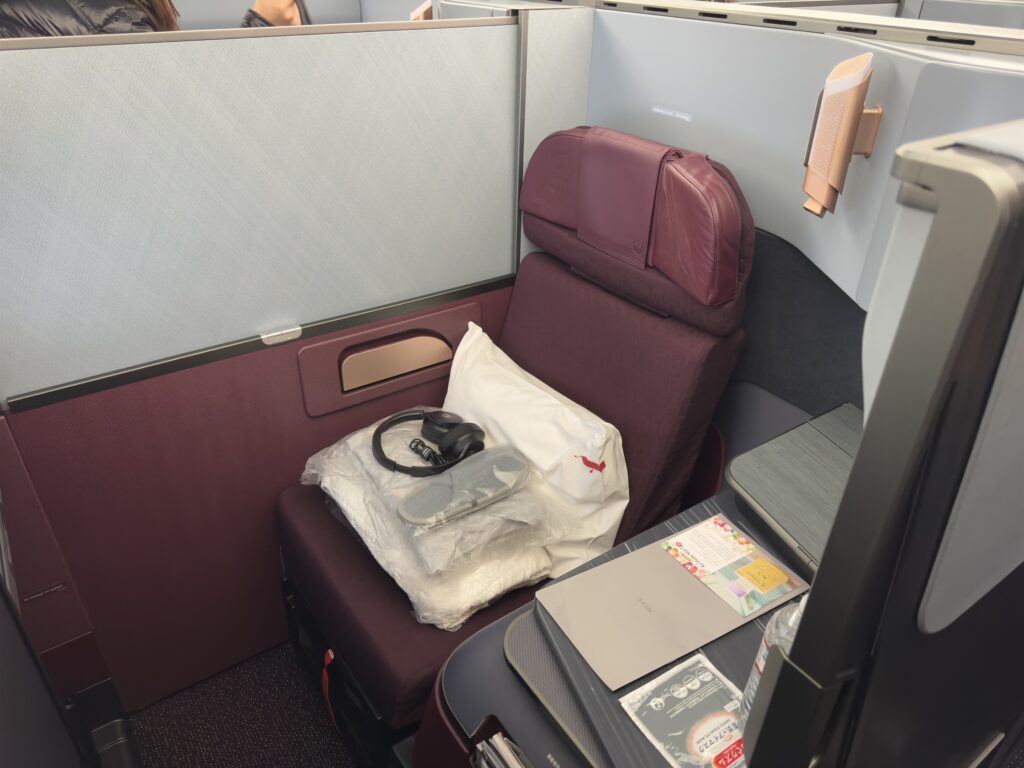
JAL’s 787-9s have two different types of business class seats. Apex Suites are used for longer routes, and mid-haul routes are primarily flown by aircraft with the Safran Aries reverse herringbone seats.
The Apex Suites have a better reputation between the two and are regarded as a comfortable option for long-haul flights:
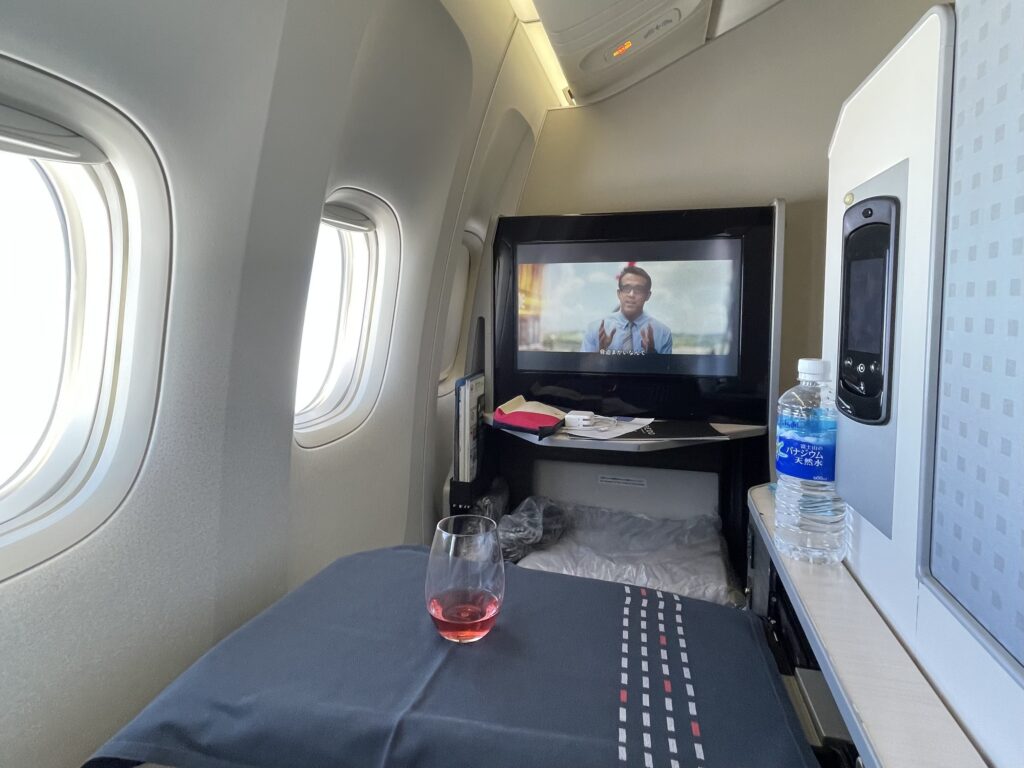
Window seats in particular, like in the image below, offer a lot of privacy. However, older IFE and other tech, in addition to wear and tear, mean that it is about time for JAL to consider a refresh. This is especially vital as its rival ANA introduces new business class seats for its 787s in August 2026.
Meanwhile, JAL’s Safran Aires business class seats for its mid-haul flights are unpopular, and many passengers would welcome a refresh.
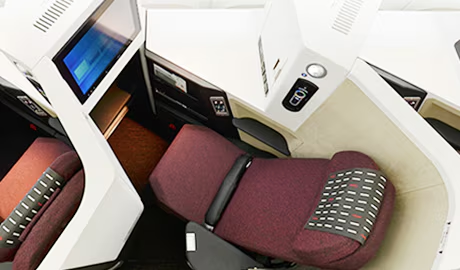
It can be assumed that JAL would use its Safran Unity seats for the 787-9 cabin upgrades, or design a modified version to better fit the dimensions of the 787, similar to how ANA did with its The Room and The Room FX seats.
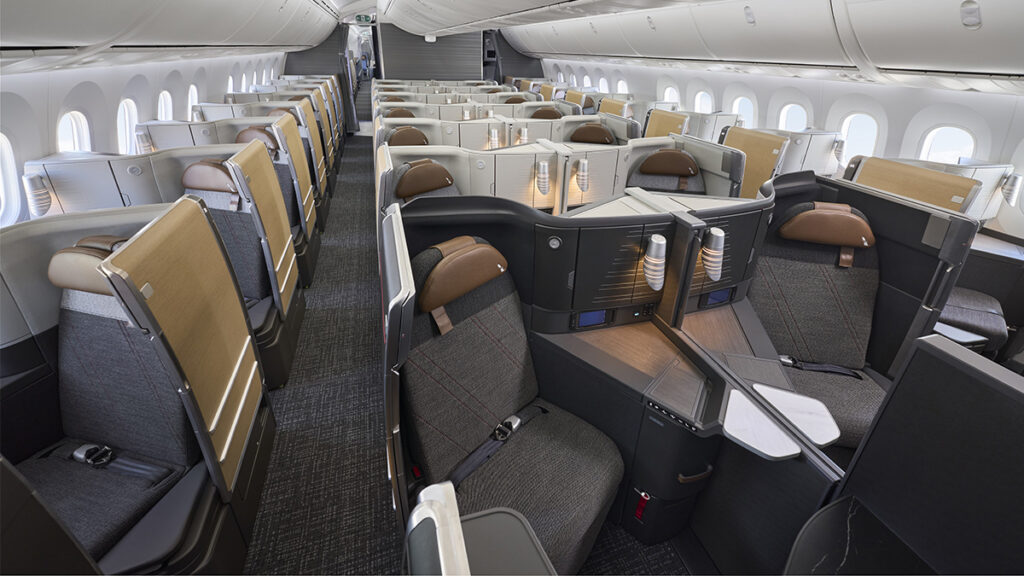
The airline could also opt for a more dense reverse herringbone layout, like the Elevate Ascent (formally known as the Adient Ascent), which has grown in popularity among airlines all around the world.
“This interior refresh reinforces JAL’s commitment to consistently delivering a differentiated, premium experience on our core international routes,” said Kyohei Takizawa, vice president of procurement for JAL. “Passengers will benefit from a seamless, best-in-class onboard experience whether they are on a newly delivered airplane or an upgraded one.”
JAL currently holds 22 Boeing 787-9s in its fleet, and has an additional 10 on order. Half of these are expected to be transferred over to ZIPAIR, the airline’s low-cost subsidiary. This leaves the other half of its 787-9s and the additional 10 on order to receive the new cabins.
JAL’s Boeing 787-8s, some of which still include the Apex Suites, currently don’t have any plans for refurbishment.
Featured image by the author.