

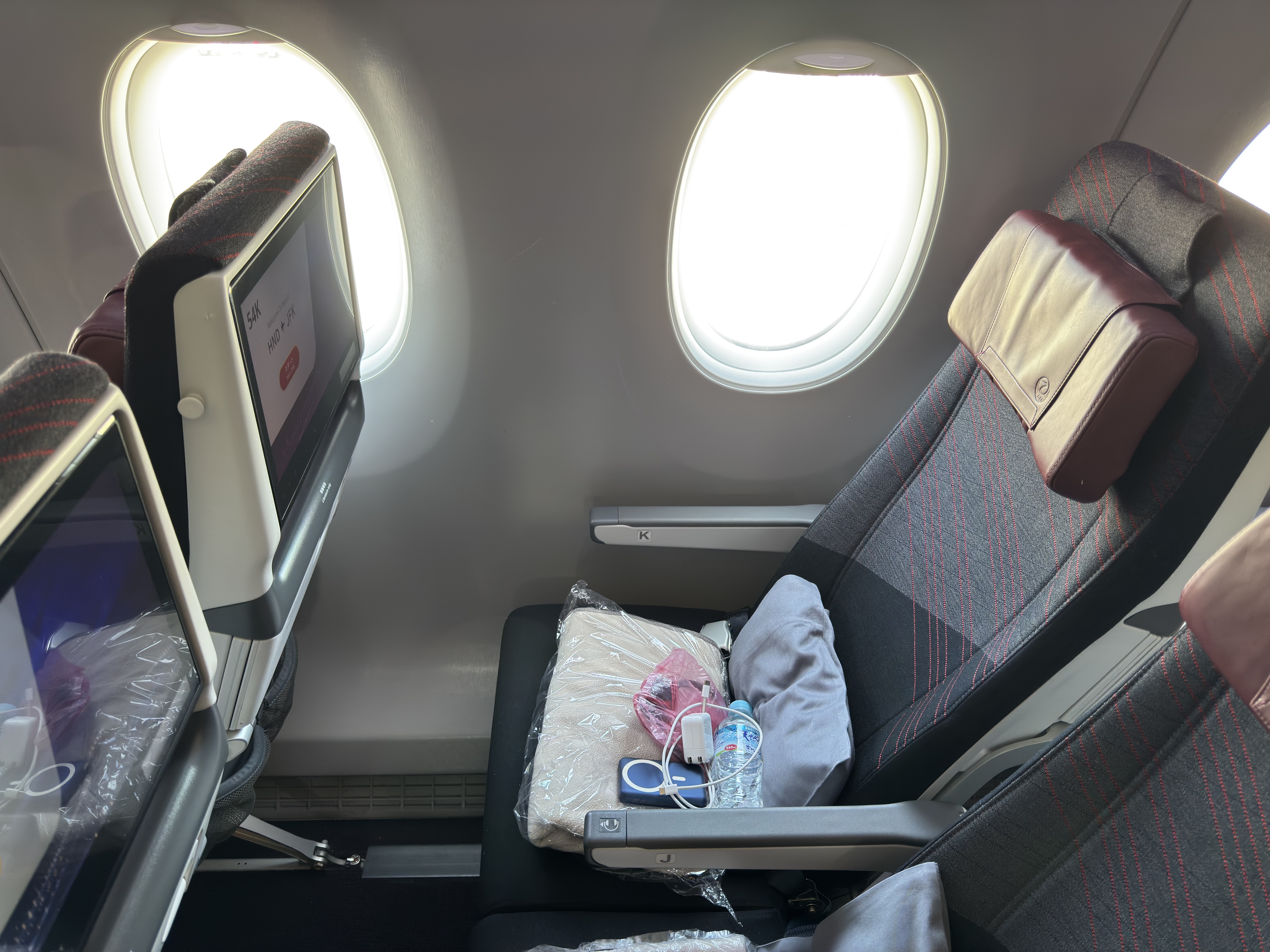
It has been nearly two years since Japan Airlines began operating the Airbus A350-1000 on international routes, with an all-new interior as its flagship product. All cabins got new seats and were updated with the latest technology, bringing a massive improvement over the airline’s previous product on the Boeing 777-300ER.
Having frequented the Boeing 777s in the past and now the Airbus A350s today, I wanted to compare the two products and go into details about the key changes.
Although I did find the seats on the Boeing 777s to be relatively comfortable, I can’t deny that the modern upgrades on the Airbus A350 have been a big improvement. Let’s go over the changes.
Cabin Configuration
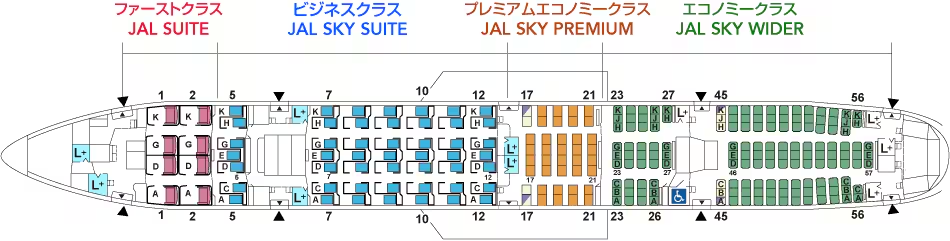
The Boeing 777-300ER features 147 economy class seats in a 3-3-3 configuration with rows 23 to 27 located in a smaller cabin. Given that some airlines squeeze in a 3-4-3 configuration (even rival All Nippon Airways squeezes in a 3-4-3 on its new 777 configuration), this is more on the generous side.
Passengers can find five restrooms: two between rows 27 and 45 and three at the very back behind row 56.
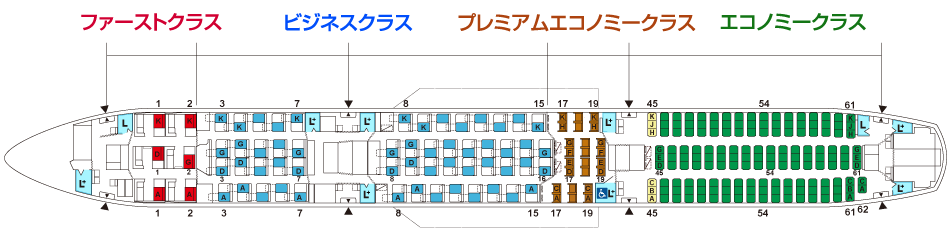
The A350-1000 features 155 economy class seats in a 3-3-3 configuration, eight more than the Boeing 777. There is just one large economy class cabin.
Passengers will find three bathrooms for economy class, all at the back of the plane behind row 62. From my experinece though, passengers are regularly allowed to use the restrooms immediately behind Premium Economy.
Old vs New Seats
JAL’s Boeing 777-300ER features the airline’s Sky Wider seats. I’ve always found them to be quite comfortable for an economy class seat, as the seats feel well cushioned.

These seats offer a generous 34 inches of pitch and 18.5 inches of width.
Interestingly, the 34 inches of pitch is nearly identical to what you would get on an extra legroom seat on a U.S. airline, like on Main Cabin Extra on American or Economy Plus on United.
In the meantime, the new Airbus A350-1000 features the Recaro CL3710 seats, which are seen on many other airlines around the world today, such as Cathay Pacific, Delta Air Lines, Qantas, and others.
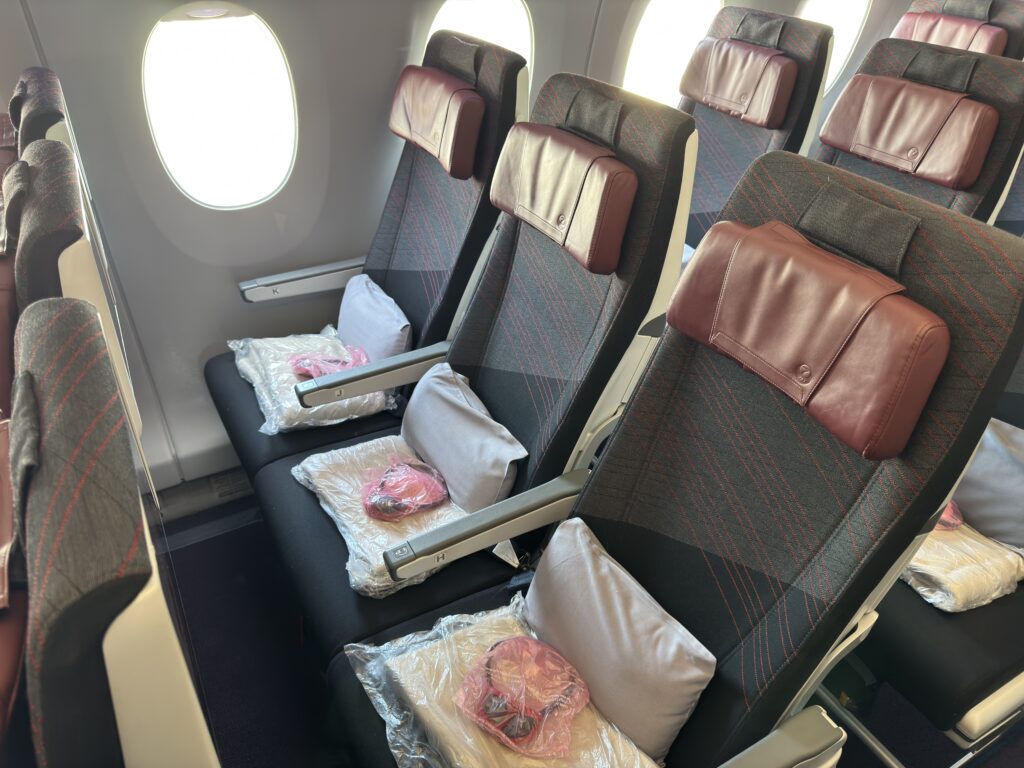
The overall comfort level remains similar to that of the CL3710s on other carriers, but Japan Airlines mostly maintained its same seat dimentions from the Sky Wider seats on the Boeing 777.
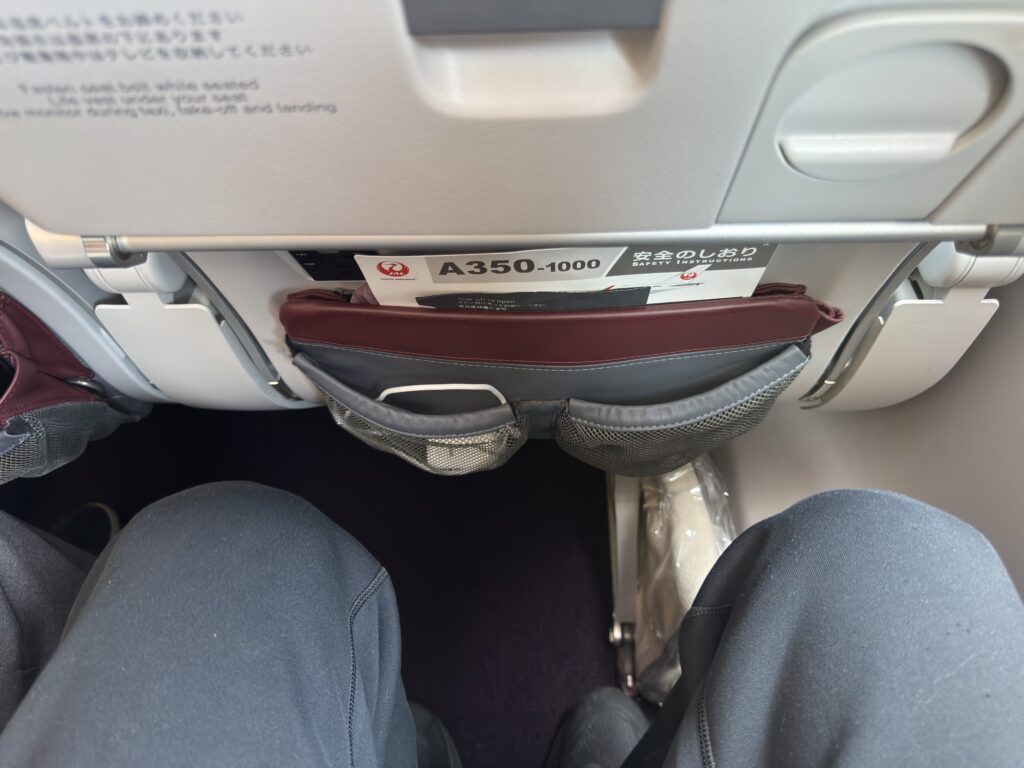
The seats offer 33 inches of pitch and 18 inches of width. Although slightly tighter than the 777, it’s still widely considered a generous offering.
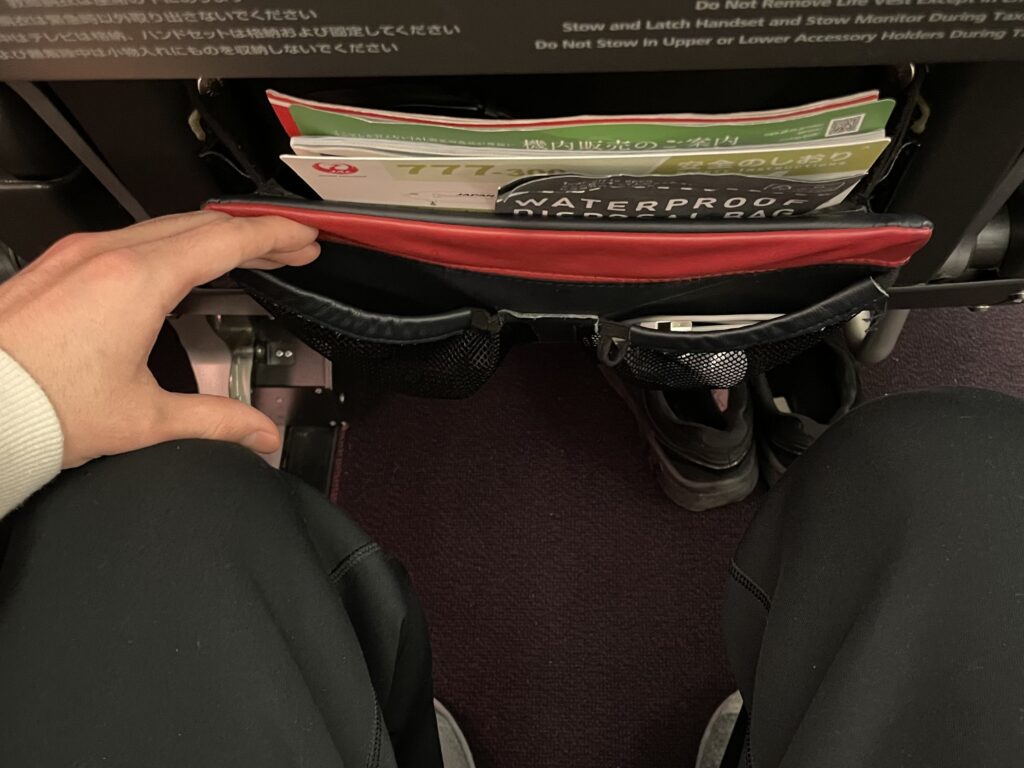
The slight difference in pitch is pretty much negligible, as someone who’s 6’1/183cm tall.
IFE and Wi-Fi
The biggest improvements when comparing JAL’s Boeing 777 and the Airbus A350 perhaps come with the IFE.
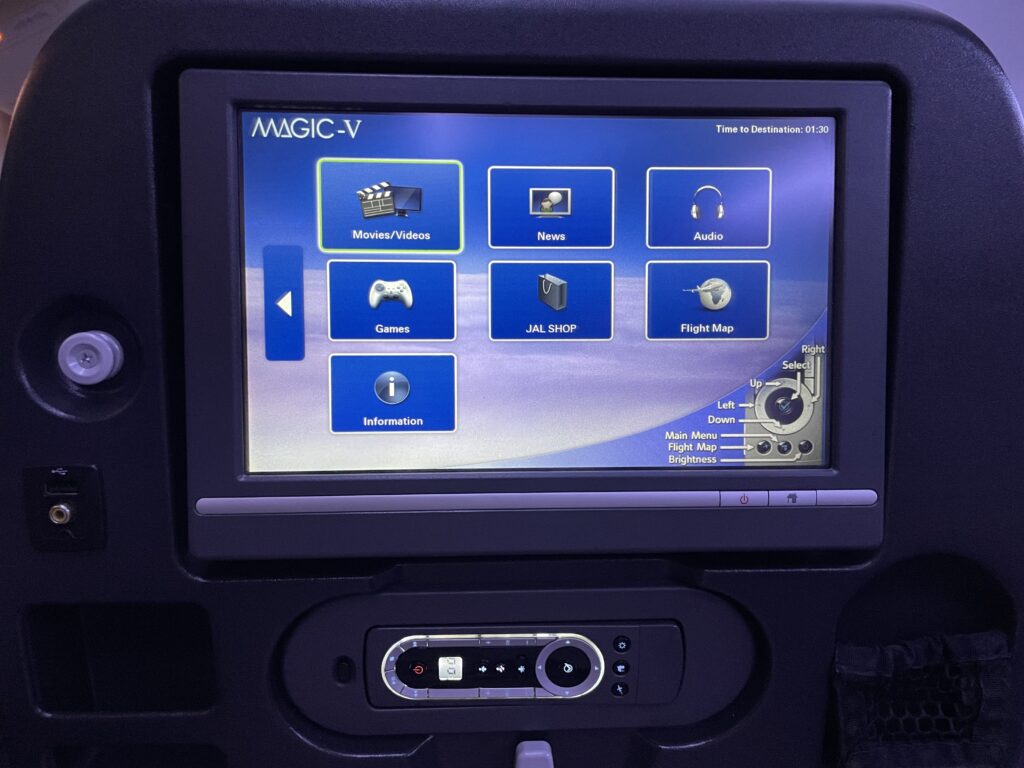
The old Magic V IFE on the 777-300ER was laggy, difficult to use, and lacked many features modern IFE systems have today.
The A350-1000s feature an entirely new system by Panasonic Avionics, which runs very smoothly with a good UI.
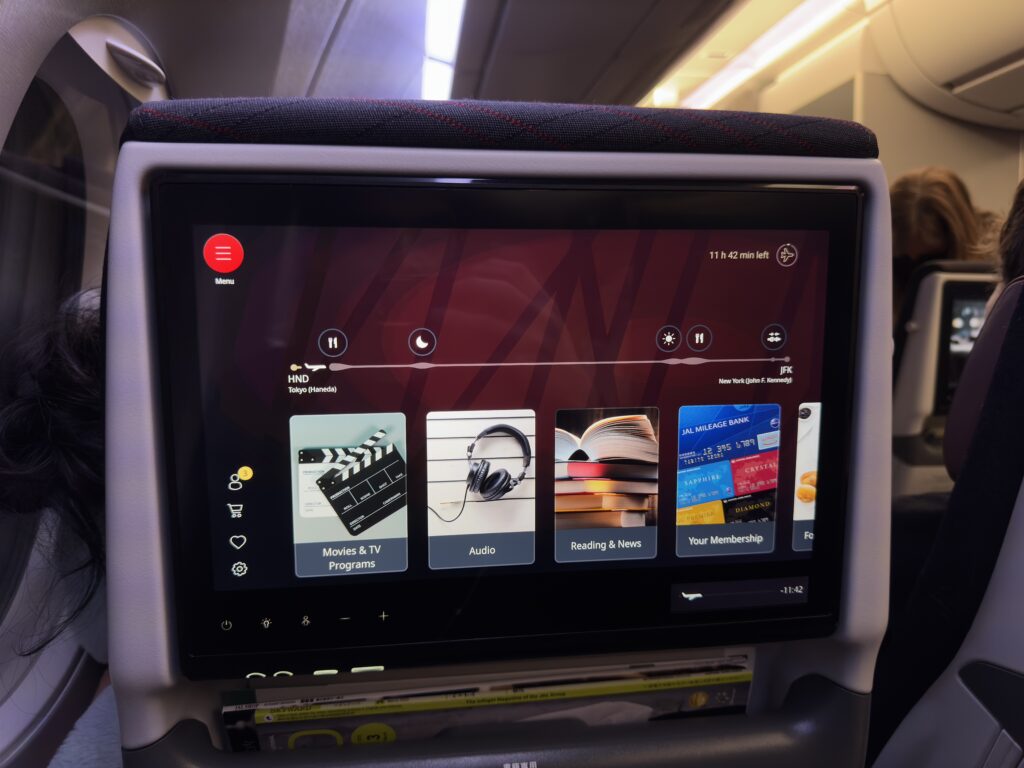
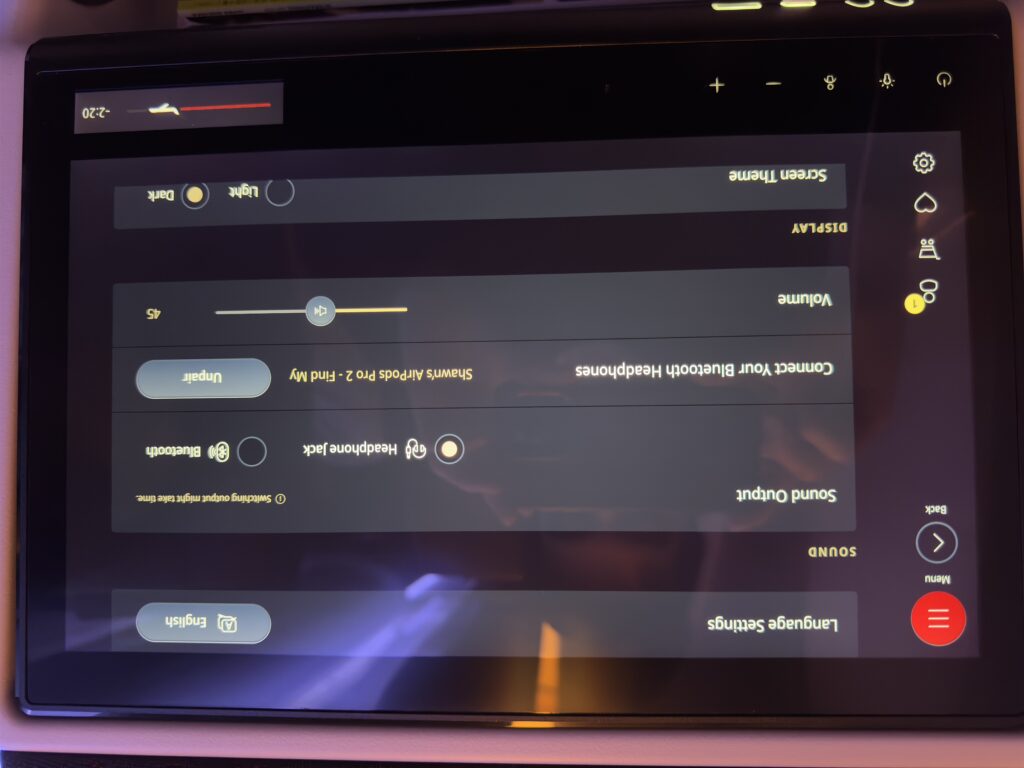
These new IFEs are also Bluetooth compatible. I had trouble connecting to them just once when I was seated in Premium Economy, but otherwise, I’ve never had issues with them. The sounds are consistent.
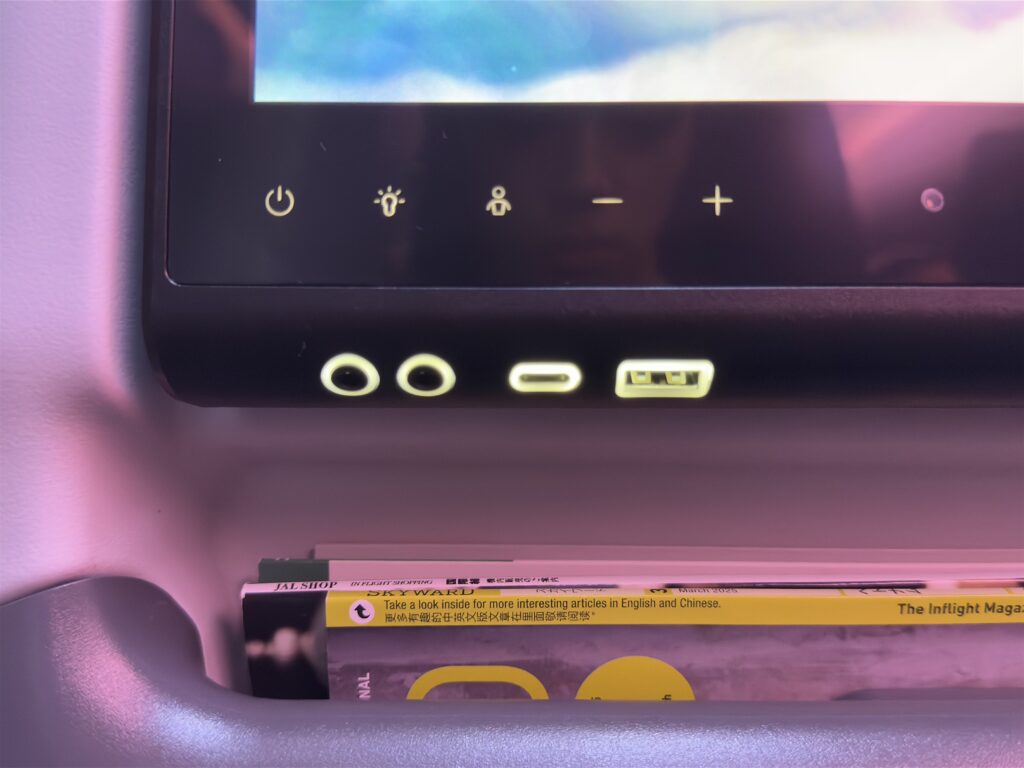
I also appreciate the USB C port on the A350s:
Wi-Fi is, unfortunately, still a subpar experience relative to other carriers around the world. I’m able to somewhat browse the internet and send messages, but speeds are quite slow.
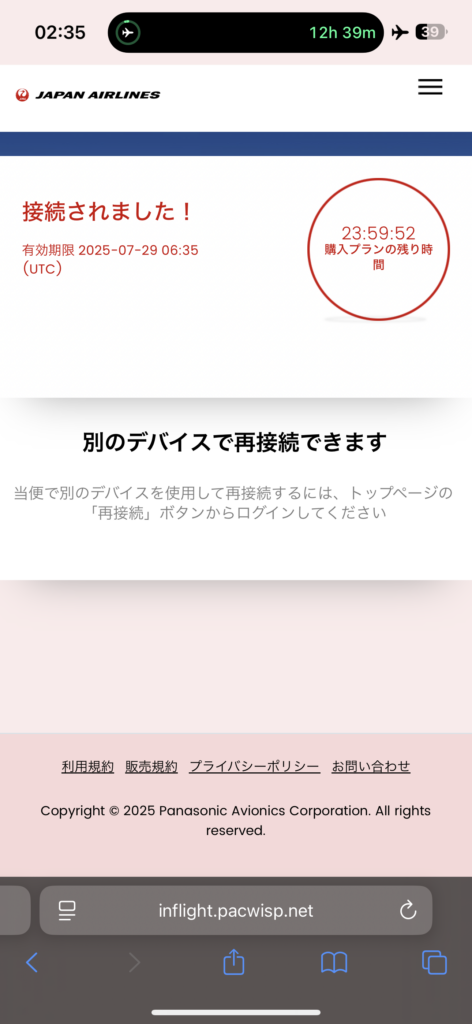
I do hope to see Japan Airlines, at some point, provide high-speed Wi-Fi via Starlink, Intelsat, or others.
The A350s are a Great Improvement Overall
I’m lucky to live on a route that is served by Japan Airlines’ new A350-1000s. I’ve had many opportunities to fly them between New York and Tokyo already, and although the experience on the previous Boeing 777s were still quite nice, I can’t ignore the vast modern finishings of the new flagship aircraft.
I did like how the old economy class seats felt, but I’m happy to see the airline mostly keep the same seat dimensions with the Recaro CL3710s on the A350s. The IFE screens, new USB C ports, and other tech upgrades were very much welcome, as the 777s were becoming quite outdated on the technology side.
All photos taken by the author.