

United Airlines shared its long-term plans for its fleet and onboard products on Tuesday, spotlighting its commitment to premium and winning loyal customers.
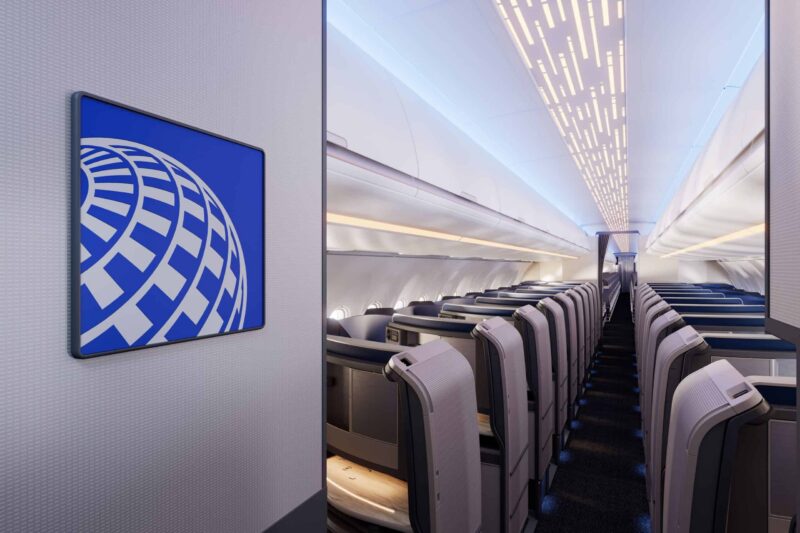
The Chicago-based airline is expecting to receive more than 250 aircraft by April 2028. Among them are the “Coastliner” Airbus A321 and Airbus A321XLR aircraft, featuring the carrier’s Elevated interior with up-to-date amenities and lie-flat seats in business class.
United is also introducing the CRJ450, a redesign of the existing CRJ200, which will offer some of the most premium experiences on a regional jet connecting Denver and Chicago to the airline’s smaller destinations.
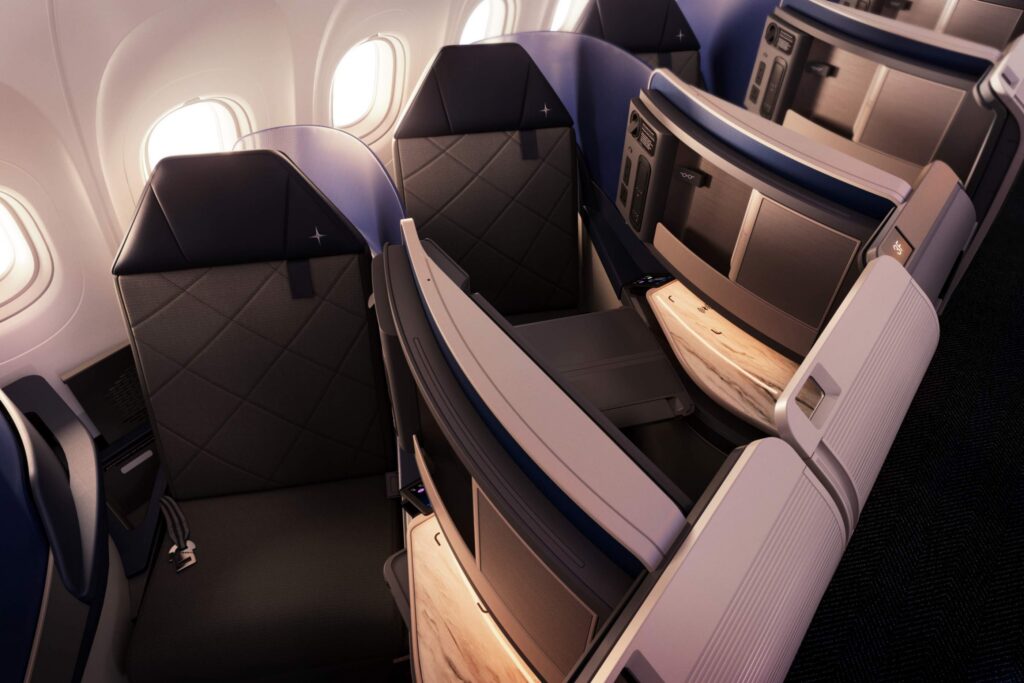
The airline’s newest Boeing 787-9s with the Elevated interior will begin international service on April 22, featuring new lie-flat United Polaris seats based on the Elevate Ascent product. They will also feature Polaris Studio, a premium bulkhead option in the first rows of each business class cabin. The airline’s Boeing 787s will also begin featuring lie-flat rows in economy class, dubbed Relax Row.
United’s 250 deliveries by April 2028 would be the most by any airline in a two-year period.
“For more than a decade, we’ve invested billions of dollars in our product, service, and technology as part of our plan to be the best brand loyal airline in the world, and the result is that more and more customers are choosing to fly us every day,” said United CEO Scott Kirby. “Today we accelerate our plans and elevate our offerings to the next level, creating an even more consistent, premium onboard experience for every customer and delivering value across every cabin of service.”
United’s record fleet upgrades spotlight its bets on the resilience of premium demand. As the airline placed aggressive orders for new aircraft in recent years, it rolled out its Next interior upgrades for its domestic fleet and expanded its premium capacity and offering, the latter of which is a trend its new deliveries will continue.
Airlines across the board have looked to pivot towards premium-heavy configurations in recent years, looking to capitalize on a premium market showing resilience and conversations surrounding the K-shaped economy.
“These new planes and products not only complement our fleet and network plans, but they also give our customers more premium amenity and seat choices – whether they bought a basic economy ticket to fly from Chicago to Ft. Wayne or are flying Polaris between San Francisco and Singapore,” said United Executive Vice President and Chief Commercial Officer Andrew Nocella.
Related: A Closer Look at United’s New 787-9 Configuration With Polaris Studio
While the industry has seen some hiccups in recent weeks with conflicts in the Middle East, demand in the U.S. has stayed strong across the board so far. However, questions remain as to how long this demand can be sustained in the event that fuel prices remain elevated from lingering geopolitical tensions.
In an interview with Bloomberg TV on Tuesday, Kirby stated that airfares may have to rise by up to 20% if current jet fuel prices remain for longer. Higher fares could lead to less consumer demand as passengers hold off bookings until a later stage.
United has already cut 5% of capacity on routes that aren’t profitable with current fuel prices, and has laid out worst-case scenarios where oil increases to $175/barrel and remains above $100/barrel through 2027.
Like Delta and American Airlines, United has seen an approximately $400 million increase in fuel costs this month.
The outlook for United still remains positive, as the airline enjoys increased bookings, perhaps from travelers looking to cash in on cheaper airfares before its inevitable increase stemming from the rise of oil prices. “The 10 biggest booked revenue weeks in our history have been the last 10 weeks,” Kirby said in a note to employees on Friday.
Kirby’s bets on premium remain key for the carrier’s ambitions. United sees an opportunity with resilient and loyal premium customers during uncertain times to cash in and increase its lead over competing airlines through opportunities that may arise, such as buying assets and absorbing network changes.
“Importantly, here’s what we’re not doing: cost cutting or deferring investments in the future,” Kirby said. “We’re ready, we have a plan, and we’re going to continue executing that plan.”
All photos by United Airlines, Inc.