



Japan Airlines currently has two different Premium Economy products in the air. You’ll find one type on the Boeing 777-300ER and Boeing 787-9s, and another type on the airline’s newest Airbus A350-1000s.
I previously went over the differences between Economy class seats on the new A350s and the older 777s in this post.
Similarly, the Premium Economy seats definitely have their own differences. The new A350 seats have some improvements, while there are also a couple of shortcomings, in my opinion.
Let’s go over the different products and see the changes.
Cabin Configuration
Below are the current configurations for the Boeing 777-300ER and the Boeing 787-9.
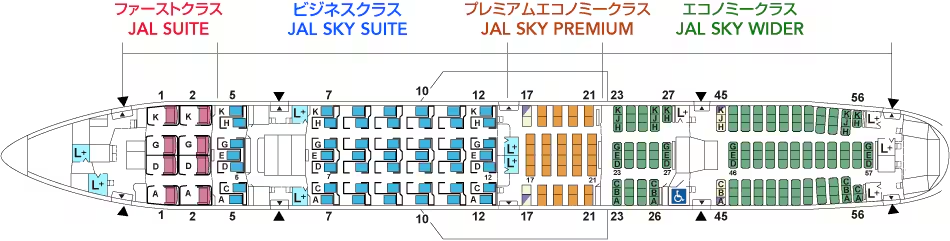
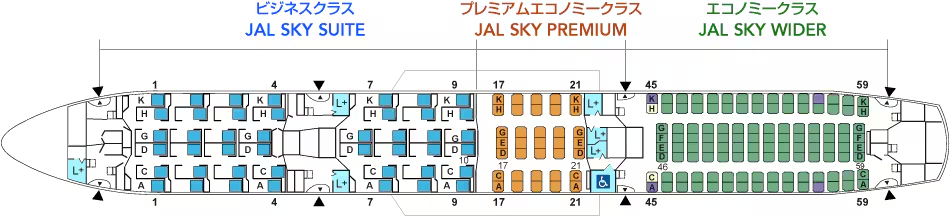
The 777 features 40 Premium Economy seats in a 2-4-2 configuration, while the 787 features 35 Premium Economy seats in a 2-3-2 configuration. Both of these are a standard layout for their respective aircraft.
On the 777, there are two bathrooms in front of Premium Economy, which are *technically* supposed to be for Business. Otherwise, there are five located in Economy.
The 787 has four bathrooms right behind Premium Economy, and those are shared with Economy. There are none at the end of the cabin, meaning all passengers in the latter half of the aircraft will use those four.
A few things to note about these Premium Economy seats:
- There are a few 787-9 aircraft with just three rows of Premium Economy, totaling 21 seats. This coach-heavy configuration is mostly used for leisurely routes within Asia.
- The Boeing 787-8 does not include Premium Economy.
- Although the Boeing 777-300ER is headed for retirement in the coming years, Japan Airlines has no plans to refurbish the Premium Economy seats on the 787-9. They will be around for a while.
Meanwhile, here’s the layout of the new A350-1000s:
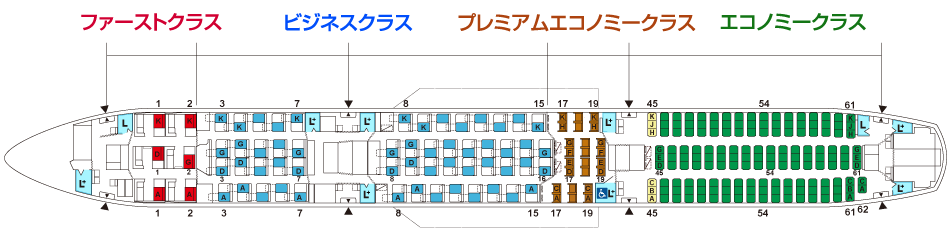
The airline interestingly reduced the number of its Premium Economy seats from 40 on the 777 to just 24 on the A350 across three rows, while maintaining a 2-4-2 configuration. This is also a standard layout on the aircraft.
There are two bathrooms located right behind Premium Economy, which are shared with Economy. I would avoid row 19, especially the middle four seats of row 19, given the proximity to those bathrooms.
Old vs New Seats
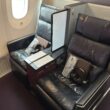
These seats, based on the Safran AIRgo FX, offer 42 inches of pitch and 18.9 inches of width.
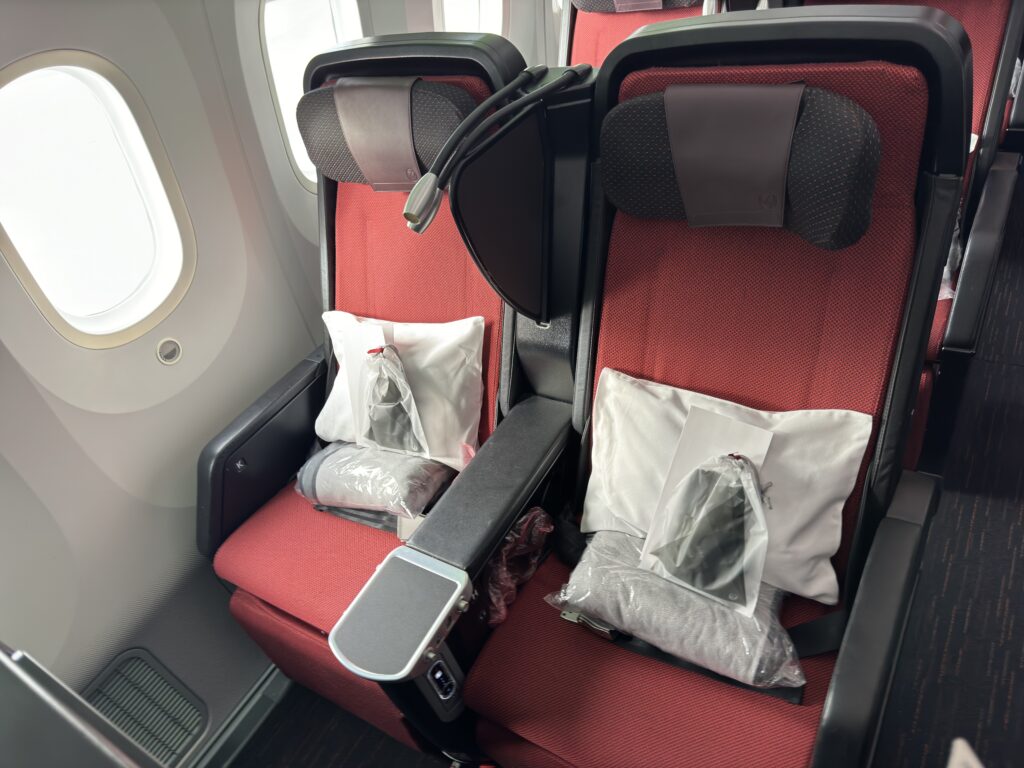
The shell seat means you recline down and forward instead of back. Although this means that the seat in front of you won’t recline into you, some may dislike the lack of recline backwards. This is the same case on the A350, although the effects feel more pronounced on the 777/787.
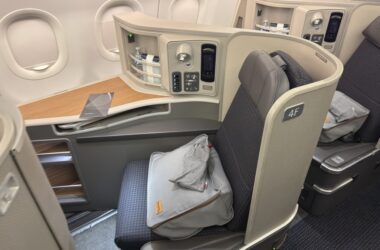
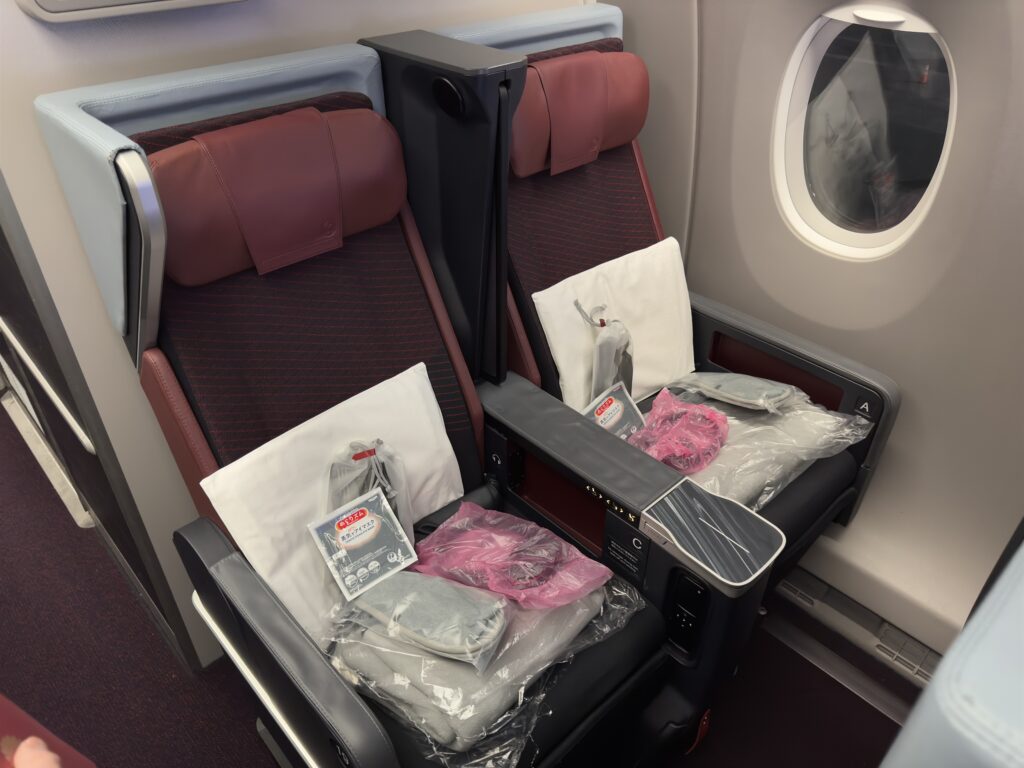
Meanwhile, the new Premium Economy seats, also by Safran, have similar dimensions of 42 inches of pitch and 19 inches of width. I do think these seats are a little more private, given the overall shape of the seat.
The recline on these seats, although still the shell type, is motorized.
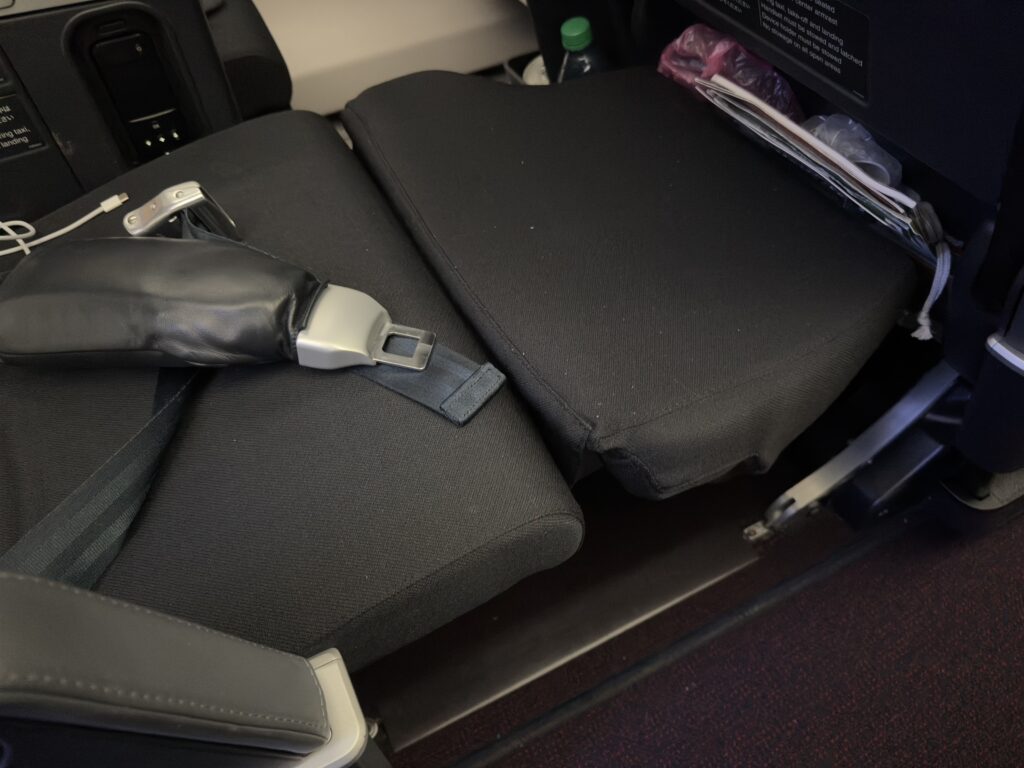
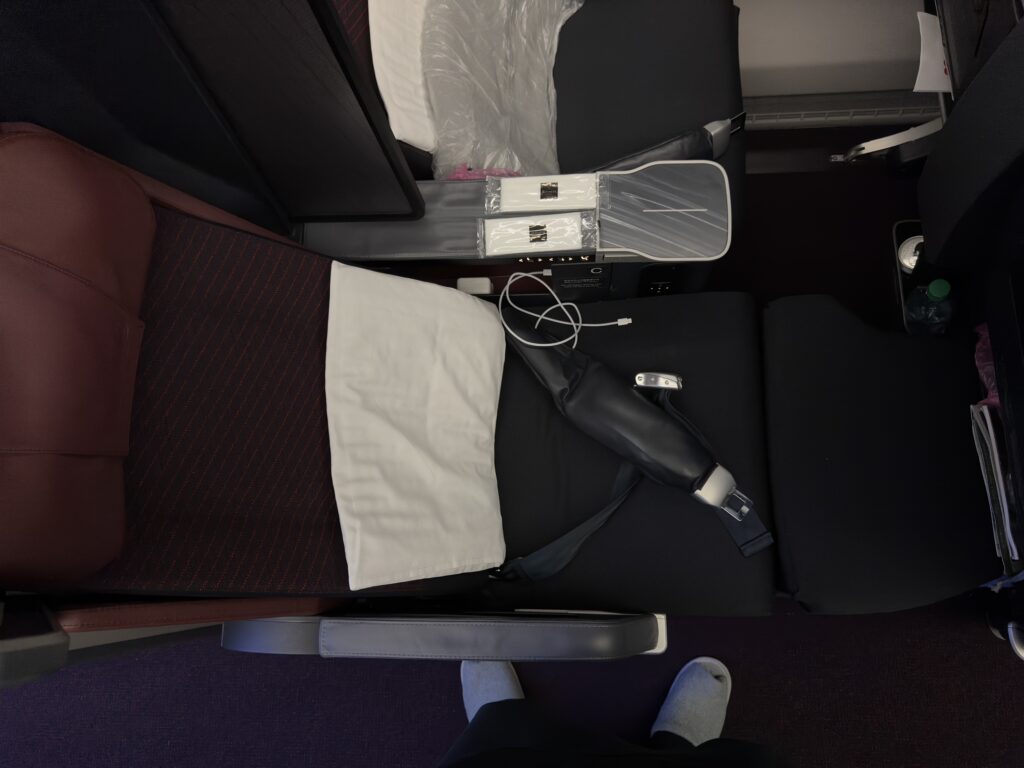
The leg rest goes up a full 90 degrees, which is an industry first. I first thought this was a cool concept, but I found it to be rather pointless. It may be nice on the bulkhead or for small children, but this isn’t ideal in terms of space for most people. I keep mine at the typical 45 degrees and use it with the footrest.
My main complaint about these new Premium Economy seats on the A350 is the hard and uncomfortable headrest, which is one of those where your head feels like it is being forcefully stuck forward. I unfortunately struggled to find a comfortable position to sleep throughout the flight, which I wrote about in my review last spring.
Gabe Leigh from Flightradar24 pointed out the same thing in his recent review.
For that reason, the softer and more generous seats on the 777s and 787s may bode better for a comfortable flight. Your mileage may vary.
IFE, Wi-Fi
The inflight entertainment system saw a significant upgrade with the introduction of JAL’s A350-1000.
The screens on the 777s and 787s can be slower, less responsive, and don’t necessarily have the latest features.
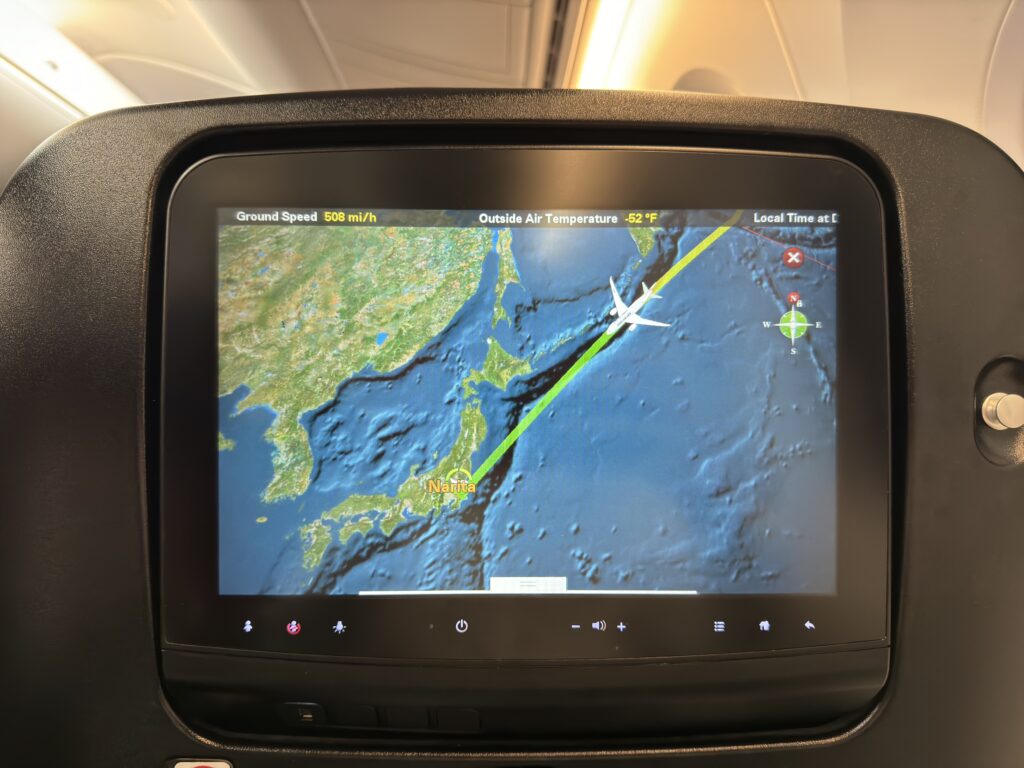
The screens on the A350s, however, have a highly responsive touchscreen, Bluetooth connectivity, personalized login features, USB-C, and more. It’s very much on par with some of the newest IFE systems out in the air today.
The selection of movies and TV shows is the same, however (which tend to be lackluster).
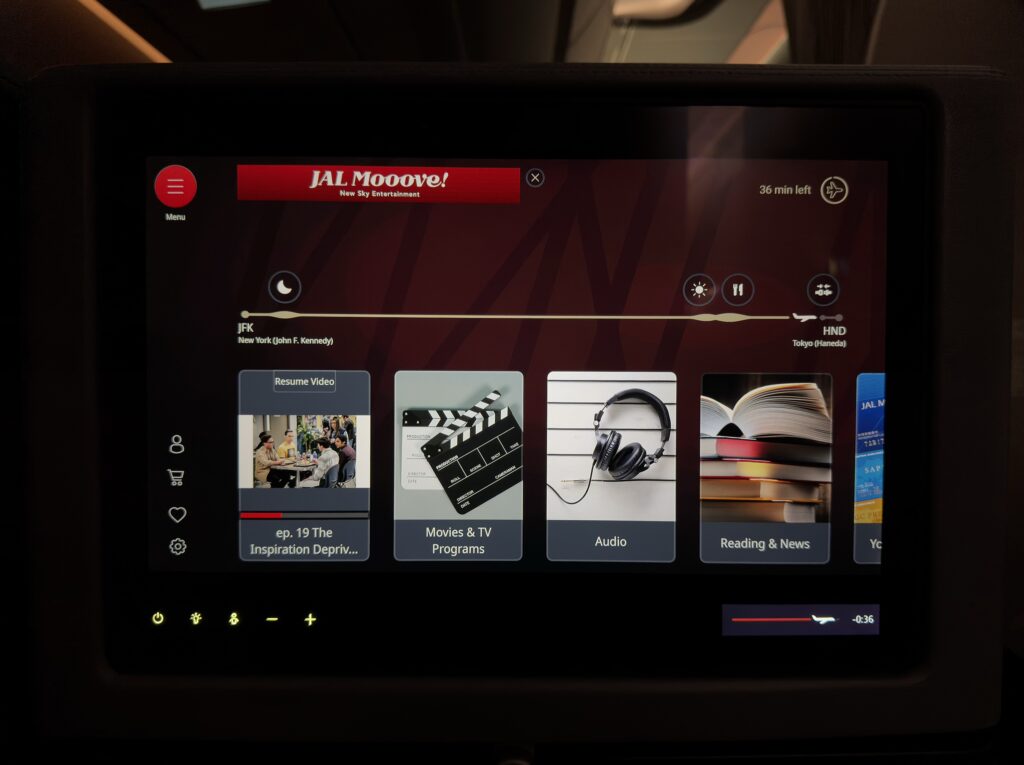
Regarding Wi-Fi, the A350-1000s, the 777-300ERs, and 787-9s all sport Panasonic Wi-Fi, which is generally poor relative to Wi-Fi offered by other airlines. There is no difference between old and new.
The A350s Are Mostly a Nice Improvement
Needless to say, I don’t think there are significant differences and improvements for the A350s compared to the previous product on the 777s and 787s. However, I do love the motorized recline and the new and smooth IFE, which is great for lounging around and spending time onboard.
My main dislike of the new Premium Economy seat is the uncomfortable headrest. It’s hard, and my head feels like it’s sticking forward.
Either way though, both seats do the job in providing generous space and offer a more elevated experience over Economy. Your mileage may vary with the headrest on the A350, but the modern IFE features and updated tech definitely make it a solid seat to call home for 12 hours.
All photos taken by the author unless otherwise noted.